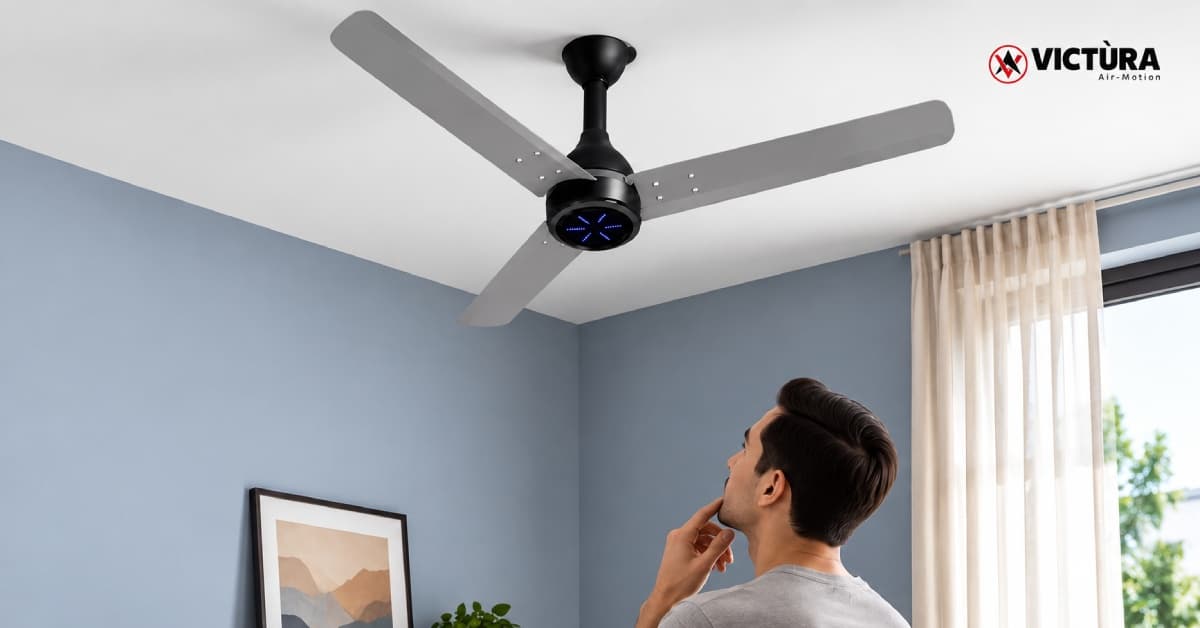
Discover how designer ceiling fans enhance interior aesthetics by adding style, texture, balance, and visual appeal while delivering comfort and energy efficiency.
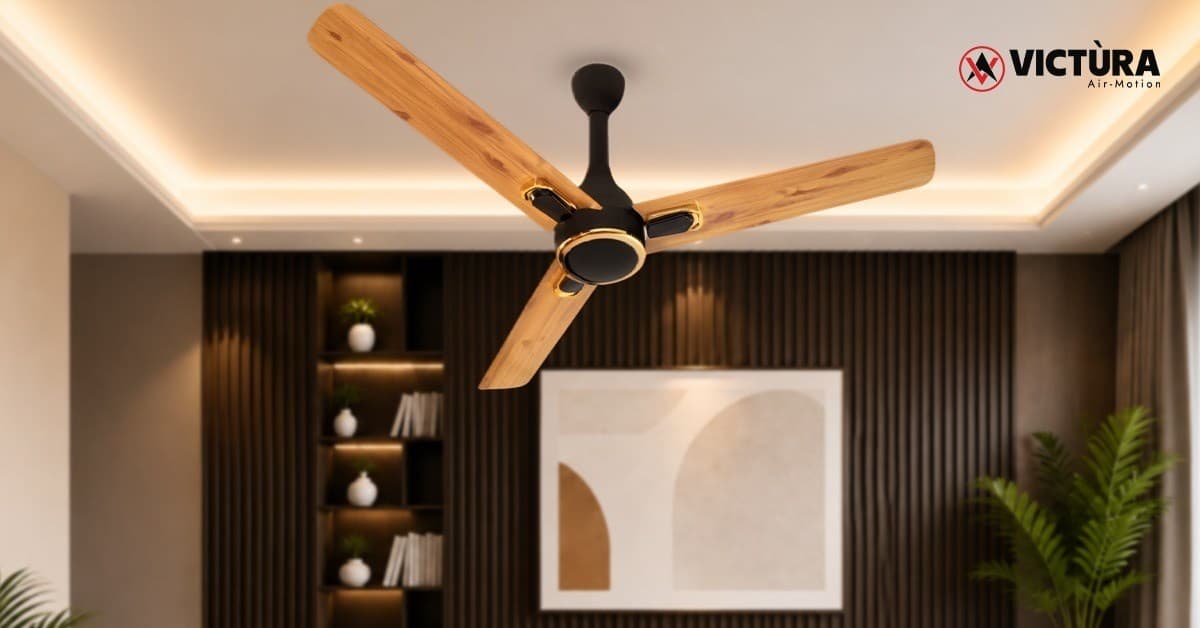
The designer ceiling fan has now come to the point where it is both functional and aesthetic, and each room was assigned a different character: transitional and expressive.
A décor that every component of modern houses is telling a visual story and ceiling fans are not excluded. At one point, the only reason to pick a ceiling fan was for its comfort; it would rotate silently and no one would bother to consider it as decor. This is no longer how people think today.
These ceiling fans are a common feature in all types of houses, from simple to opulent, dictating their size, materials and ambiance. If the fans are placed right, they will not only make the room cooler but also the whole aesthetic experience will be raised.
A well-formed space calls for a focal point, something that the eye eagerly approaches. A designer ceiling fan is the element that most often takes the visual center position in many rooms, particularly living rooms and bedrooms.
If this central location is occupied by a fan that has designer qualities, then it is converted into a benefit. Winning the gaze are sculpted blades, refined finishes, or minimalist silhouettes that not only draw but also balance the visual weight of the furniture below.
The ceiling is no longer feeling and looking empty or neglected; rather, it is now involved in the design story as an intentional part.
This visual anchoring in an open-plan house becomes even more dramatic. A single, carefully selected fan can set the areas without walls, marking where the lounge ends and the dining begins, in a very subtle way.
In most cases, ceilings are regarded as neutral backgrounds, painted white and neglected. However, designer ceiling fans alter that relationship.
A fan with black matte hardware, metal accent pieces that have been brushed and natural wood blades will introduce contrast and texture high up. The additional dimension that is created makes the ceiling rather be considered an integral part of the room than a disregarded place.
The installation of striking fan designs along with the use of longer downrods in rooms with higher ceilings not only increases the vertical dimension of the room but also gives it an elegant and opulent look that is not overbearing.
Thus, the ceiling is no longer just a part of the aesthetics but has instead become a full-fledged part of the aesthetics.
Good interiors have a universal language. The whole house may be modern, industrial, coastal, or classic, but every part is a contributor to that vocabulary and ceiling fans are included.
Simplicity-loving houses can take advantage of fans in a sleek style that is not too tall about their presence, with no straight lines and no colours captivating the eye.
Bold and loud finishes, integrated lighting or geometric blade designs are the things for contemporary spaces to pair with.
The interior with natural and warm feelings has been promoted by wooden textures and organic forms.
Luxury places are more inclined, sometimes, for the kind of fans that look like chandeliers or are just sculptural installations.
If there is a fan that goes along with the design language, the room gets to be an intentional one. If not, even the finest of the furniture will find it difficult to make up for the lack of it.
Texture is the factor that prevents a room from looking flat but excessive decorative elements can easily make a room feel crowded. Designer ceiling fans can bring a very rare advantage: they add texture and at the same time do not occupy floor or wall space.
Metallic surfaces will change the light reflection depending on the day and night. Wooden fans will introduce the sun's warmth and the beauty of the wood grain. Matte layers will make the lighting less harsh. All this is going on above while the room is peaceful and tidy.
This becomes particularly valuable in small living quarters. Instead of putting more décor pieces that will take over the surfaces, a designer fan provides visual interest from above.
The feel of a room is greatly influenced by the lighting, and ceiling fans, although indirectly, have a significant impact on how the light behaves. Some ceiling fans are designed in such a way that the lighting is easy to see as part of the entire design rather than a mere function.
Different lighting methods are used, for example, diffused LEDs, hidden sources, and smoothly shaped fixtures, to eliminate the harsh glare and make the lighting uniform. In addition, even the ceiling fans without lights have a role in the lighting by the gentle shadows that they create or by the light that bounces off their surfaces.
The interplay between the fan and the light in the room creates an illusion of depth, making it appear as if it were stratified, depending on the various times of the day, and thus, being pleasant.
Interior design is a matter of personal preference. The selection made speaks silently about the lifestyle and values of the person using the space, even though it is often a very subtle one.
A designer ceiling fan is a mark of a very careful process. It is said that comfort and aesthetics are both important; that technology can share the same space with beauty, and that even the functional parts require a very careful selection.
Guests might not be consciously analyzing the fan, but they will surely recognize the balance it introduces in the room. This gradually promotes a place that feels unified and grown-up, where nothing appears to be either temporary or just functional.
A single blade, carefully shaped, shifts how light moves across walls. Where function meets form, space begins to feel intentional. Balance emerges not from symmetry alone, but through rhythm in motion. Texture rises softly as air circulates, altering shadows minute by minute. Design reveals itself quietly, not in objects, but in their effect.
Their role ranges from defining focal points to supporting a home’s design language; their impact is quietly but powerfully felt. A properly-selected designer ceiling fan becomes an integral part of the interior narrative without compromising style but rather amplifying comfort.
As the trend is going towards more thoughtful and detail-oriented design in homes, the ceiling fans have quit being background players. So, get Victura Airmotion fans that make the interiors look complete, cohesive, and timeless.
No. Designer ceiling fans are available in a wide range of styles and budgets, making them suitable for apartments, villas, and compact homes alike.
Not a chance. These fans are picked based on their ability to devour hot air and deliver it efficiently, thus providing comfort in the most stylish way.
Of course. The designer fans are available to blend in with each and every theme from minimalistic and contemporary to warm, natural, and classic interiors.
The maintenance is almost the same as for regular fans. With quality finishes and durable materials, they often require the same basic care and this will help to keep their appearance for a longer time.
To keep the visual consistency, match the fan’s finish with existing elements like furniture, lighting hardware, or door fittings.
The majority of the latest designer fans have been fitted with energy-efficient motors that are very good in terms of airflow but low in terms of power consumption.
Keep moving with bright ideas. From the way air moves to clever home hints, our blog is your place to dive into ease, style, and smart energy use.