Using a fan in reverse allows the heating system to work significantly less. In fact, properly circulating warm air can let you lower your heater settings by 10-15% without losing an ounce of comfort.
Think about a ceiling fan that not only cools you in summer but also positively impacts the efficiency of your heater in winter. The majority of people consider ceiling fans as "summer appliances".
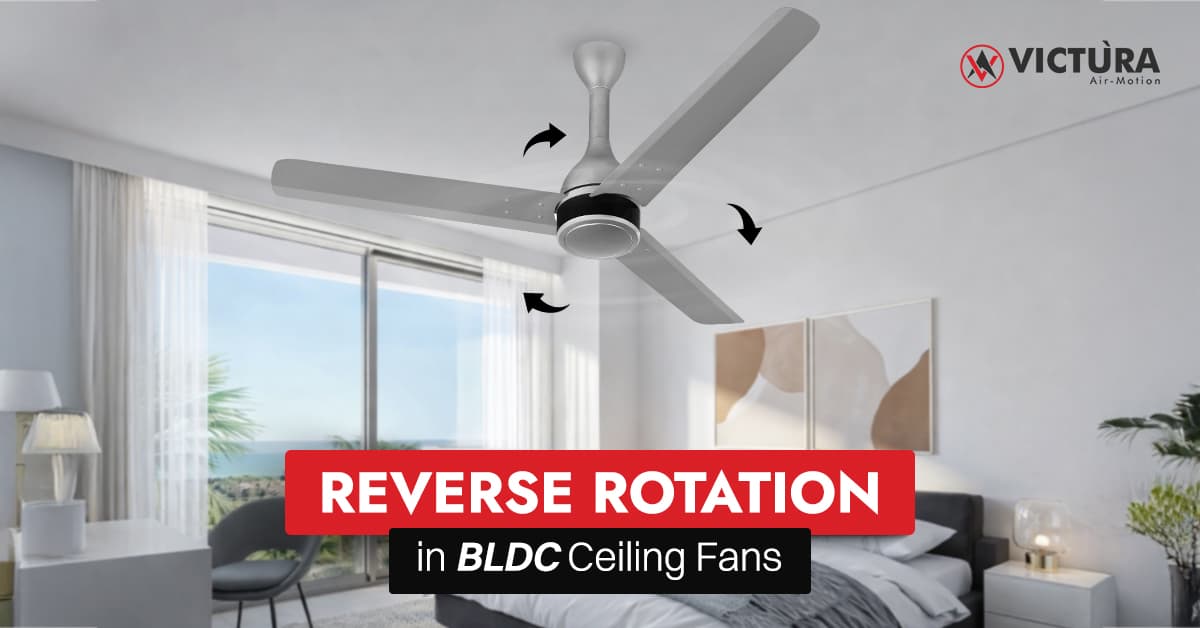
However, the advent of Brushless Direct Current (BLDC) technology has completely transformed the situation. One of the most underrated yet powerful features of modern BLDC fans is "Reverse Rotation" or "Winter Mode".
Simply by flipping a switch or pushing a button on your remote control, you can change the airflow dynamics of your fan. This article will discuss reverse rotation, how it works, and its significance in obtaining comfort throughout the entire year while saving a lot of energy.
Most fans spin counter-clockwise to push air straight down. That’s the "wind chill" effect you love in July. But physics works both ways.
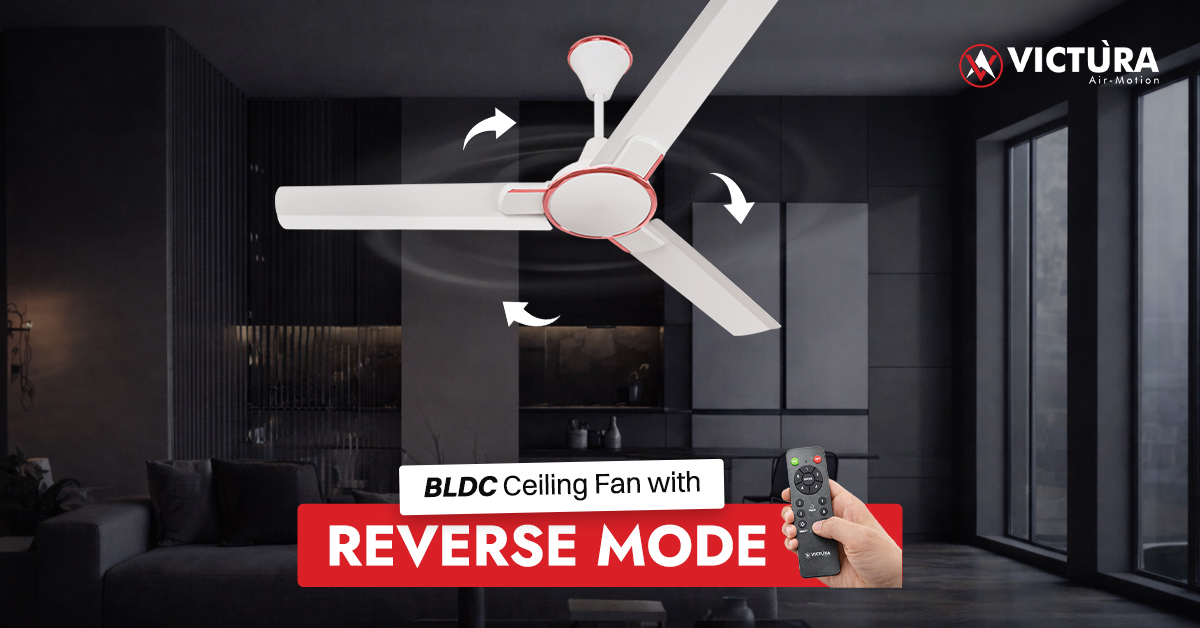
Starting at the top, flipping a BLDC fan backward makes the blades turn rightward. Rather than pushing air down, it draws cooler currents up from below and lifts them overhead.
Traditional induction motors often make this a chore, sometimes requiring you to climb a ladder and click a tiny physical switch on the motor itself. BLDC motors solve this with smart electronics.
Just one press of a button on a handheld gadget or phone and the flow flips, switching course without noise. This quiet shift happens fast, no effort needed, fitting smoothly into modern living.
Heat is known to move upwards, and this is a very unpleasant phenomenon. The warmest air in your house is always above, giving you no benefit while getting cold on the sofa. This phenomenon is called heat stratification. It is both an energy loss and a decreased comfort in one.
The updraft made by the delayed fan at a low speed gently pushes the trapped warmth away from the ceiling and gradually draws it down along the walls. A circular current is formed, which in turn, brings the heat back to the floor level where you actually live. You get the same temperature from the floor to the ceiling without even playing around with the thermostat.
Energy efficiency isn't just a buzzword; it’s a direct benefit to your wallet. Using a fan in reverse allows the heating system to work significantly less. In fact, properly circulating warm air can let you lower your heater settings by 10-15% without losing an ounce of comfort.
Consider the "28-Watt Factor." A standard BLDC fan runs on roughly 28-35W, while an old-school induction fan gulps down 70-80W.
When you use a low-power BLDC fan to supplement your heater, the "payback period" for the fan's cost shrinks dramatically. It’s one of the few home upgrades that actually pays you back every single month.
A breath of fresh air makes everything better. When winter comes around, most people keep windows closed, which makes the air get trapped inside.
Rooms start feeling dense, especially where you sleep or relax. Try switching your ceiling fan direction; motion changes, but chill stays away.
Who knew quiet airflow could mean so much to light sleepers? Moving air stays clean when it keeps drifting through the room instead of pooling in corners.
Dust floats longer, giving filters more chances to catch it before it lands on surfaces. Even during cold months, spaces stay alive without drafts near beds.
Air movement, besides its advantage of personal comfort, provides protection to the house. The condensation forms when the warm and humid air inside the house contacts a cold window or wall. If this moisture is not removed, it will encourage the growth of fungi like mold and mildew.
Using a fan in reverse guarantees that the air does not become stagnant in the corners and decay. It equalizes the humidity levels so that your wooden furniture does not get warped and your walls remain perfectly dry.
It is such a straightforward preventive step that it can save thousands in terms of potential repairs later on.
Reverse rotation isn't just for snowy days. It has practical perks all year round:
High Ceilings: If you have a vaulted ceiling or a large hall, reverse mode is a must. It’s the only way to manage that massive volume of air effectively.
The Dining Room: Ever notice how a fast fan cools down your dinner before you can eat it? Reverse mode circulates the air in the room without blowing directly on your plate.
Indoor Laundry: During rainy seasons, a fan in updraft mode helps pull moisture away from hanging clothes, significantly speeding up the drying process without taking up floor space with a bulky dryer.
The reverse rotation function is indeed a significant development in the area of home climate control and is not simply a technical gimmick. You can create a comfortable environment all year if not only with a fan, but also with a system that is recognized by lower energy bills.
If you are planning to upgrade your house, do not go for a conventional fan that is used only for half of the year. Buy a BLDC fan today and feel the difference in the intelligent rotation. Check out our newest line of BLDC fans and make your energy bills lower this season!
Reverse rotation is when a fan spins in the opposite direction. The motor turns clockwise, different from its usual flow. Air gets drawn up toward the ceiling rather than being sent downward into the room. Really helpful for winters.
Warm air tends to rise and get stuck near the top during cold months. That trapped heat can be pushed downward when the fan runs backward. Moving it like that helps spread warmth more evenly across the room. The efficiency of heaters goes up since less energy is wasted. The reverse setting on a BLDC fan makes this possible without extra devices.
Most times, a ceiling fan spins backward because someone hit the Winter setting by mistake. Try pressing that button once more; this should return it to regular airflow. The change helps circulate warm air during colder months instead of pushing cool breeze down.
A spinning motion that goes backward moves warmth around more evenly. This kind of airflow lowers what you pay for power each month. Stale air fades away even though there is no rush of wind. Moisture inside windows and walls is kept under control, too.
A breeze moving down does the trick when lowering the room's heat. Spinning blades that push air straight downward make your skin sense cooler temps fast.
During hot months, spinning blades the usual way on slow works well for sleep. When it gets cold outside, flipping rotation helps mix warm spots while avoiding chilly gusts right on the skin.
Keep moving with bright ideas. From the way air moves to clever home hints, our blog is your place to dive into ease, style, and smart energy use.