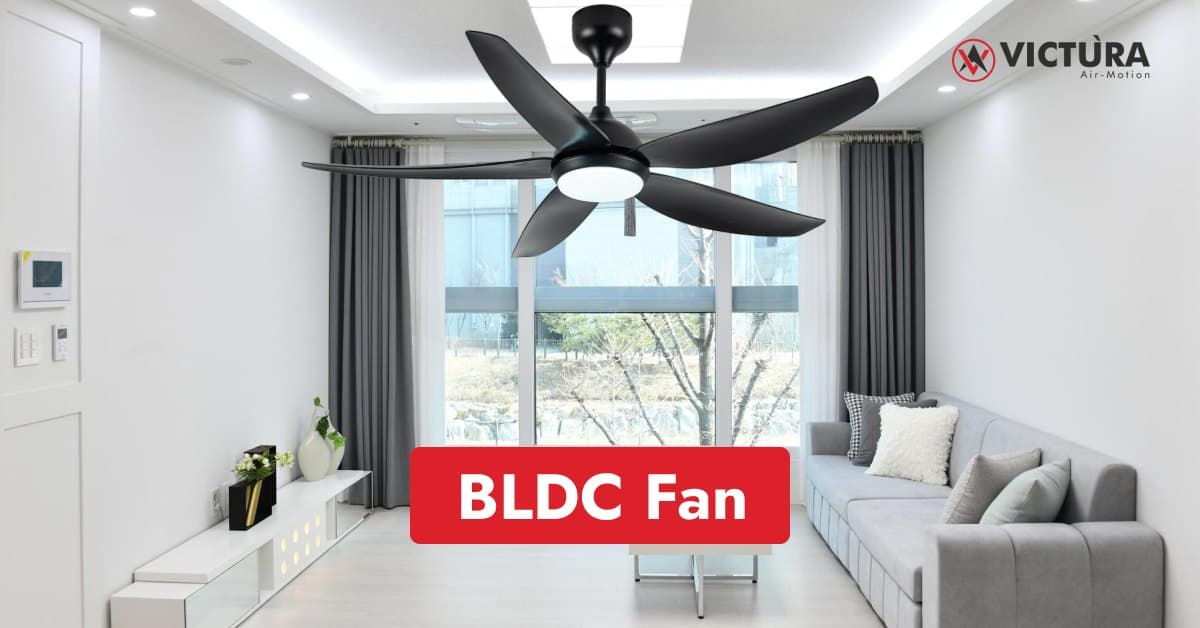
Soundless fans consist of advanced motor technology and aerodynamic blade balancing to function at near silence and still maintain a steady air flow.
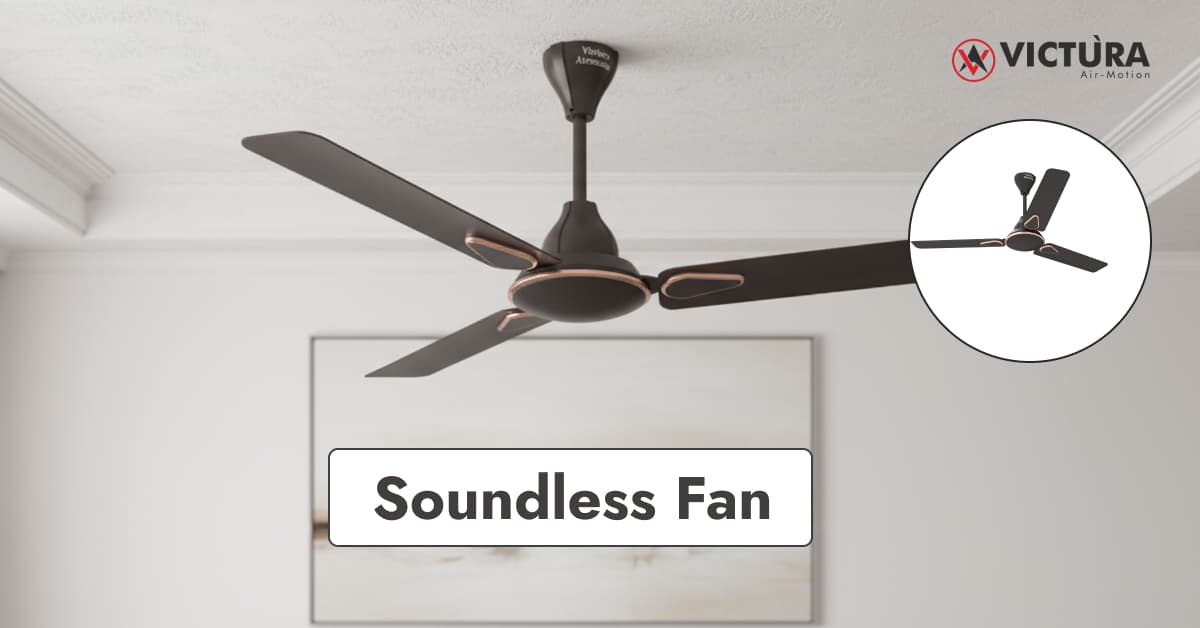
Pioneering a "silent" or a soundless fan is a concept that is extremely attractive. Trying to concentrate in a home office, watching a movie in your own cinema, or merely sleeping - all would be made better if there were no interruption from the continuous noise of a motor. Zero-noise fans appear to be the ultimate luxury.
However, if we talk about reality, could it be making soundless fans so quiet?
Let’s look at the factors that lead to their low noise level and how to select the best one for an absolutely calm atmosphere.
Absolute silence in the domain of sound is 0 dB(A), which is the auditory threshold, a level of sound pressure that can hardly be found in nature, except in a vacuum or an anechoic chamber.
A fan, just as any other appliance, has noise through two main points:
The origin of this noise is the rotation of the motor, the bearings, and other internal parts. A cheap fan is usually accompanied by a "hum" or "drone" sound which can be heard.
The noise of the fan cutting the air and the turbulence created by the air flow are the main reasons for the noise. The fan that you are holding now probably make this "rushing" or "whooshing" sound which is the exchange of air.
The only way a fan can be completely silent is if it is turned off.
Some "silent" or "soundless fan" labels are used by manufacturers to describe those fans that operate at a noise level that is minimally audible to the human ear in a low noise environment. This feat is the result of the implementation of several advanced engineering techniques in the fan:
The Issue: Conventional AC motors usually come with a feature that an electromagnetic hum is created. A modern silent fan is equipped with a highly efficient DC motor (often brushless), which not only runs smoother but is also silent at low speeds, thus lowering the mechanical noise significantly.
The Reason: Fan blades of conventional design are primarily meant for the movement of air, which is a process that can lead to the development of air turbulence inside the fan housing.
The Fix: Silent fans have blades that are aerodynamically optimized (sometimes more blades or specially shaped blades) to move air more smoothly and efficiently, thus the minimum turbulence contributes to the reduction of the "whoosh" effect.
The Rule: One big fan going slow can displace the same volume of air as a small fan running fast but at half the noise level, roughly. Numerous quiet fans employ large diameters and slow rotations to maintain noise levels low and provide satisfactory cooling at the same time.
Precision balancing is one of the high-quality fan characteristics, which, along with anti-vibration mounting (like rubber pads or specialized mounts), helps to avoid that the motor's insignificant vibrations become transmitted into the fan housing or the structure it is mounted to.
3 Tips for a Truly Quiet Experience
Don't be taken in by the fancy words that manufacturers use to market their product and simply compare the dB(A) ratings of a fan at the lowest setting. The noise level at this point is the one that should be heard during sleep or work.
The fans with DC motors (Brushless DC or BLDC) are the ones which are almost always quieter than their AC counterparts, thus the easiest way to silence the motor hum is by using DC motors.
A large fan at low speed is naturally less noisy than a small one attempting the same airflow by spinning its blades fast.
The expression soundless fan only serves to emphasize our craving for tranquility and is really an excellent marketing phrase. Despite the fact that no fan with moving parts can get down to 0 dB(A), designing technology has made it possible to get very close to it.
While shopping, you should remind yourself that "noiseless" is "whisper-quiet," and seek for low dB(A) ratings along with DC motor technology. By this, you are able to have a refreshing and strong airflow which is so quiet that you may even forget that the fan is there from time to time.
Soundless fans consist of advanced motor technology and aerodynamic blade balancing to function at near silence and still maintain a steady air flow.
The difference between soundless and regular fans is that the former use BLDC motors and are engineered with precision to cut down to a minimum vibration, humming, and blade noise.
Indeed. The vast majority of present-day soundless fans are powered by BLDC motors that take only about one-third of the energy that conventional induction fans use.
Yes, of course. These fans' noise-free running makes them very suitable for calm places like bedrooms, study rooms, libraries, and work-from-home setups.
The only maintenance that these fans might need is regular cleaning of the parts. Also, their advanced design has a low rate of wear and tear on moving parts.
While they might be priced a bit higher, the advantages of silence, energy savings, and longevity make them a smart investment.
Keep moving with bright ideas. From the way air moves to clever home hints, our blog is your place to dive into ease, style, and smart energy use.