Understanding ceiling fan energy ratings can help you make smarter buying decisions and lower your electricity bills. Learn how BEE star ratings, wattage, airflow, and modern BLDC technology impact energy efficiency, long-term savings, and overall fan performance.
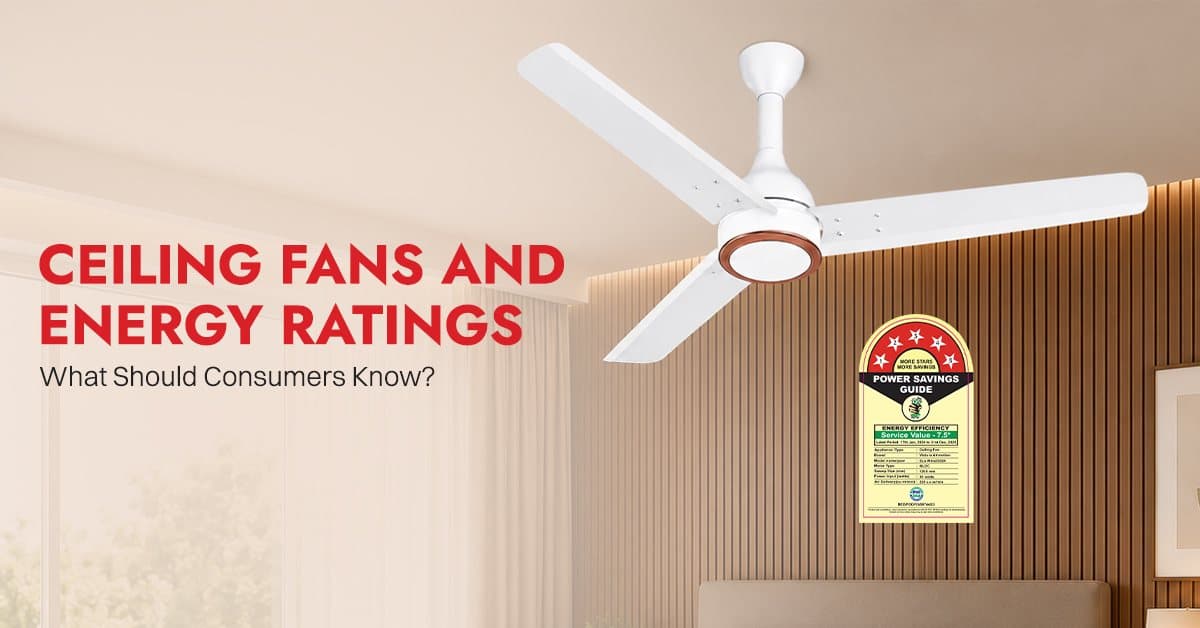
Indian households use ceiling fans as their most effective silent functional device. The device operates continuously through three different seasons which include summer, monsoon and winter with a daily operation time that extends from eight hours to twelve hours.
The majority of people who purchase fans base their decision on the product's aesthetic appearance, its blade dimensions and its market price, while they spend only a short time examining the energy rating sticker.
The small label present in this product contains important information about its operation. The fan consumes electricity at a specific rate which is measured in hourly, daily and yearly intervals. The spending pattern on your electricity bills starts to increase because your expenses rise beyond what you can afford which creates financial difficulties for you.
Let us explain the energy ratings of ceiling fans because they can help consumers in choosing their products through understanding their importance.
People need to understand energy ratings because these ratings have become essential for their operations. The electricity charges for consumers increase through gradual increments, which occur every month because of higher rates required during extended summer periods. Ceiling fans, because they run for such long hours, amplify these increases.
The two fans show a power usage difference of 30 to 40 watts which appears to be small. The calculation starts with:
The small power usage difference results in a total cost that exceeds thousands of rupees during the complete operational period of the fan. Energy ratings exist to make this invisible cost visible.
The Bureau of Energy Efficiency (BEE) established energy efficiency standards which India uses to evaluate ceiling fan performance.
The familiar star rating label ranges from 1 star to 5 stars, where:
But here’s where many consumers stop reading and that’s a mistake.
The star rating provides a comparative assessment while wattage delivers the actual performance results.
Traditional induction-motor ceiling fans consume power between 70 and 90 watts when operating at maximum speed.
Modern energy-efficient fans which utilize advanced motor technology can operate between 25 and 35 watts when running at their maximum speed.
Two fans may both carry star labels, but their actual wattage can still differ. Always check the wattage mentioned on the label or product specifications.
The fan uses wattage to measure its consumption of electrical power. The fan reduces its monthly bill expenses when it operates at lower power consumption levels.
Energy ratings exist because they require specific testing procedures. Ceiling fans undergo testing in NABL-accredited laboratory environments that measure three different aspects of fan performance.
The rating reflects how efficiently a fan converts electrical energy into airflow, not just how fast it spins. The reason for this research is that fast-spinning fans which consume more electricity do not provide superior performance when compared to slow fans which deliver effective airflow.
The ceiling fan market has undergone its most significant transformation through the introduction of BLDC (Brushless Direct Current) motor technology.
From a consumer’s perspective this change matters because BLDC fans:
Today's top-rated fans reach their high efficiency levels thanks to this specific technology. Although this technology requires a larger initial investment the resulting savings over time will surpass the initial cost difference.
We need to make the math simpler.
In homes with multiple fans, the savings compound quickly. Over 5-7 years, the cost difference between a basic fan and an efficient one often pays for itself, and then some.
Energy ratings also serve a crucial function during power outages.
Lower-wattage fans:
The energy-efficient fan provides people who live in areas with frequent power outages a dual benefit because it helps them save money and stay comfortable during extended nighttime power outages.
The statement "All fans feel the same once they’re on" contains incorrect information. Efficient fans operate at their best when they achieve their intended airflow volume while maintaining their maximum speed.
"Star ratings don’t matter for small appliances" is a false statement about ceiling fans that people use. Their long operating hours make efficiency critical because ceiling fans require extended usage throughout their entire operation time.
"A higher star rating results in decreased airflow capacity" shows an incorrect relationship according to current fan technology. Modern efficient fans use advanced design to create powerful airflow systems that operate on reduced energy consumption.
Customers should pause their shopping activities to evaluate showrooms and online stores. The following information needs to be checked:
The fan operates between two states because these details control its performance during extended periods instead of short time frames.
The decision process for selecting an energy-efficient ceiling fan remains silent because it does not make an audible sound. The product maintains its original appearance because the changes to your home remain minimal. The appliance reduces electricity use while decreasing demand on power systems and cutting down utility costs for your home throughout each month.
The fans in this country serve as permanent fixtures that require people to learn about energy ratings because they need to understand this information. People become better consumers when they learn to make informed decisions about their purchases while getting immediate comfort and future savings.
The best home improvement for your property becomes the upgrade that provides daily efficient performance like Victura Airmotion ceiling fans do.
Yes, ceiling fans star ratings are officially given by the Bureau of Energy Efficiency (BEE) which indicate how much energy the fan consumes. The higher the star rating, the more energy it saves.
The energy rating measures how effectively a fan transforms electrical input into generated airflow. The BEE label displays this information which enables users to assess power consumption between different products.
The most energy-efficient fans use advanced motor technology which includes BLDC-based models that use less than half the power of standard fans.
Every ceiling fan has a certain wattage they use for running. Standard fan models consume 70-90 watts, which is quite high. Meanwhile, energy efficient BLDC fan models consume 25-35 watts per hour.
Higher star ratings reflect better efficiency, not weaker airflow. Efficient fans with good design provide powerful airflow while using less energy.
Low-wattage fans operate for extended periods during inverter power outages while consuming less battery capacity throughout power interruptions.
Keep moving with bright ideas. From the way air moves to clever home hints, our blog is your place to dive into ease, style, and smart energy use.