Modern BLDC fans are engineered for silent performance. The motor design reduces friction, while electronic speed control eliminates mechanical noise.
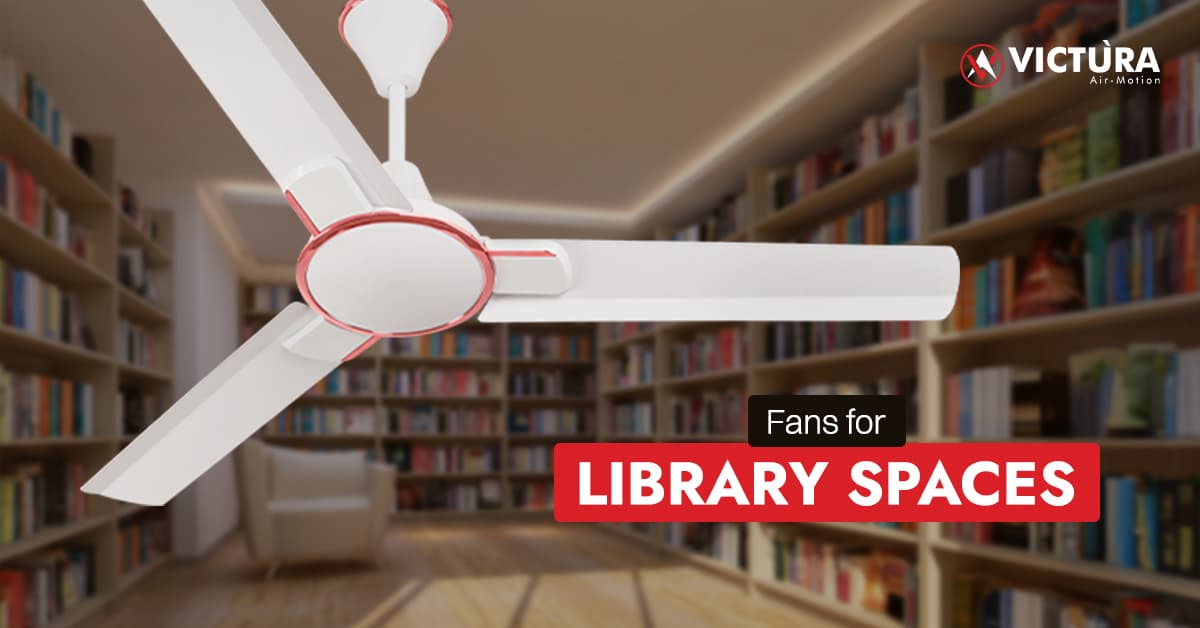
A library has a unique kind of silence. It is not empty or lifeless; it is full of thought. Pages turn softly, chairs shift quietly, and concentration hangs in the air. In such a space, comfort must work invisibly. Too much noise distracts.
Bad air circulation makes it difficult to read for a long time without interruptions. One of the most neglected factors in library design but directly influencing the duration of people's stay, their concentration level, and the overall ambiance of the space is proper airflow.
Good air circulation coupled with ceiling fans, can make a library a learning environment that feels effortless all along. Let’s see how you can make reading spaces more comfortable with
Libraries are different from homes, cafés, or offices. They are built for stillness, long hours, and deep focus. That means airflow has to strike a careful balance:
Poor airflow doesn’t announce itself loudly. It shows up subtly:
Good airflow, on the other hand, disappears into the background. And that’s exactly how it should be.
Libraries aren’t single open halls. They’re layered spaces with very different needs.
These zones demand calm, consistent air movement. Sudden drafts or noisy fans can break concentration just as quickly as heat can.
Rows of shelves restrict natural air circulation. Without proper movement, these areas trap warmth and humidity, bad for both people and books.
Electronics generate heat. Without steady airflow, these sections become noticeably warmer than the rest of the library.
Small enclosed areas heat up faster and often receive less direct ventilation.
Designing airflow for libraries isn’t about power alone. It’s about thoughtful coverage.
While air conditioners manage temperature, ceiling fans manage comfort. In libraries, the right fan doesn’t dominate the room. It supports it. What works best is:
This is where BLDC ceiling fans naturally fit in library environments. They are designed for long, uninterrupted use, drawing less power while maintaining stable airflow.
In a space that stays operational from morning till evening (or even late into the night), this matters more than most people realise.
In a library, noise is not just an inconvenience. It’s a disruption. Traditional fans often introduce:
Over time, these sounds become noticeable, especially in quiet rooms.
Modern BLDC fans are engineered for silent performance. The motor design reduces friction, while electronic speed control eliminates mechanical noise. The result is air movement you feel, not hear.
In libraries, that difference defines the atmosphere.
One of the biggest mistakes in large libraries is uneven airflow. You’ll often notice:
Proper fan placement and adequate blade sweep help solve this.
Fans with optimized blade design move air horizontally and vertically, ensuring circulation reaches both seating areas and shelves. When airflow is even, readers don’t keep adjusting their posture or relocating their seats. They stay. They focus. They read longer.
Libraries often operate on tight energy budgets. Lighting, computers, air conditioning, and extended operating hours already consume significant power. A conventional ceiling fan running all day can quietly add to electricity costs. BLDC fans change that equation.
By consuming significantly less power than traditional induction fans, they allow:
In fact, when ceiling fans are used alongside ACs, the thermostat can often be set a few degrees higher without sacrificing comfort, resulting in additional energy savings. Over months and years, the difference becomes measurable.
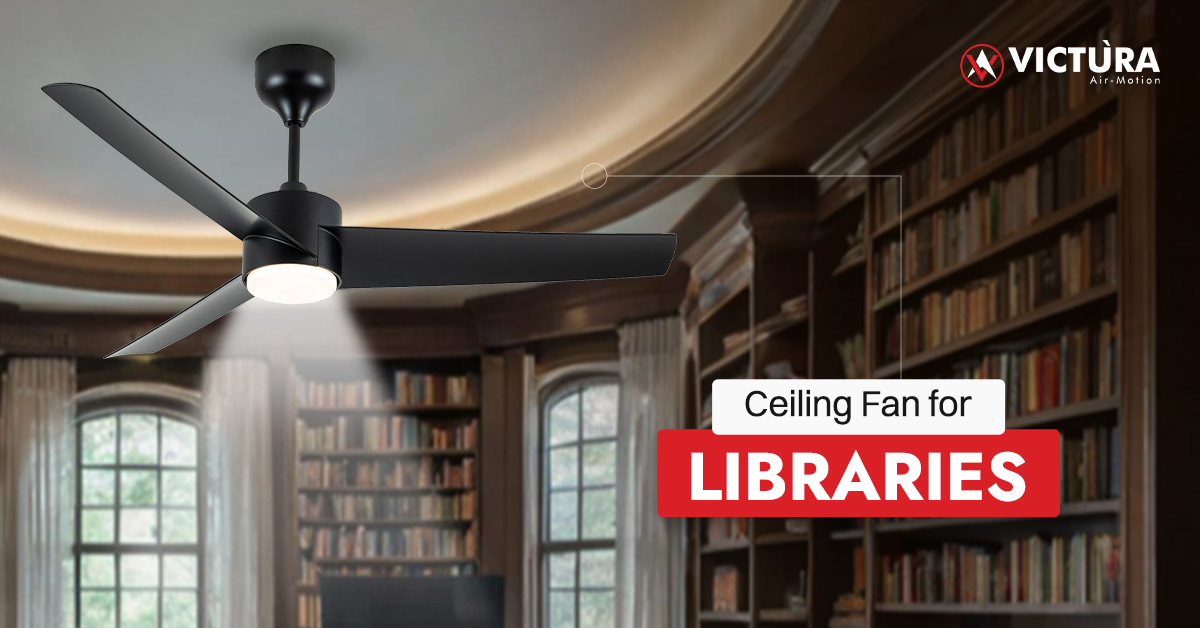
Readers aren’t the only ones affected by poor airflow. Books absorb moisture. Wooden shelves react to humidity. Paper ages faster in stagnant environments.
Proper air circulation helps:
Libraries are long-term spaces. Airflow is part of their preservation strategy, not just their comfort plan.
Libraries are meant to feel calm and timeless. Loud designs and bulky fixtures don’t belong here. Modern ceiling fans come with:
When thoughtfully chosen, fans don’t draw attention. They quietly become part of the architecture. That’s exactly what a well-designed library needs.
The most comfortable libraries don’t rely on cooling alone. They rely on circulation.
Fans help distribute conditioned air evenly across the room, preventing cold spots near vents and warm zones farther away. This balanced approach:
It’s not about replacing cooling systems. It’s about making them work better.
BLDC fans are built for spaces that value calm, consistency, and long hours of operation.
They focus on:
In libraries where distractions are unacceptable and comfort must be steady, these qualities matter every single day.
Proper airflow may never be the most visible feature of a library, but it shapes every experience within it. A quiet space holds focus, slows rushing thoughts. When it ends, memory of ease decides whether feet come back.
Fans run without noise, moving air well while using less power. What seems like a simple device turns out to do more than just spin overhead. They become part of the learning environment itself.
Victura Airmotion fans are designed to support spaces where quiet matters, efficiency counts, and comfort must never interrupt concentration. In libraries, the best technology is the kind that works so smoothly, it almost disappears.
Fresh air moving through a room keeps things quiet while making the space feel just right. When warmth does not gather, people find it easier to keep reading. A steady flow supports clear thoughts over time.
A single fan might stir air without loud noise. Some models run hushed, fitting calm rooms.
Yes. You would need to get a fan that works silently, like a BLDC fan. A well-chosen unit blends into silent spaces. Fans today run so quietly you might forget they’re on. These modern ceiling models work without disturbing even a library’s calm. Their brushless motors hum softly, if at all. Peaceful air movement is now standard.
Fans on the ceiling move cool air around so it spreads better. Because of that, AC units do not need to work too hard. Less power gets used when things stay balanced.
Middle of the library, right under the reading spaces, works best for fans, so air spreads evenly. Across big rooms, spacing them out avoids strong gusts while keeping the flow steady.
No, ceiling fans don’t affect books or shelving. They only move air softly, making sure air flows quietly and everything stays steady.
Yes. These quiet BLDC models save electricity unlike other fans; perfect for reading spaces open long into the day.
Keep moving with bright ideas. From the way air moves to clever home hints, our blog is your place to dive into ease, style, and smart energy use.