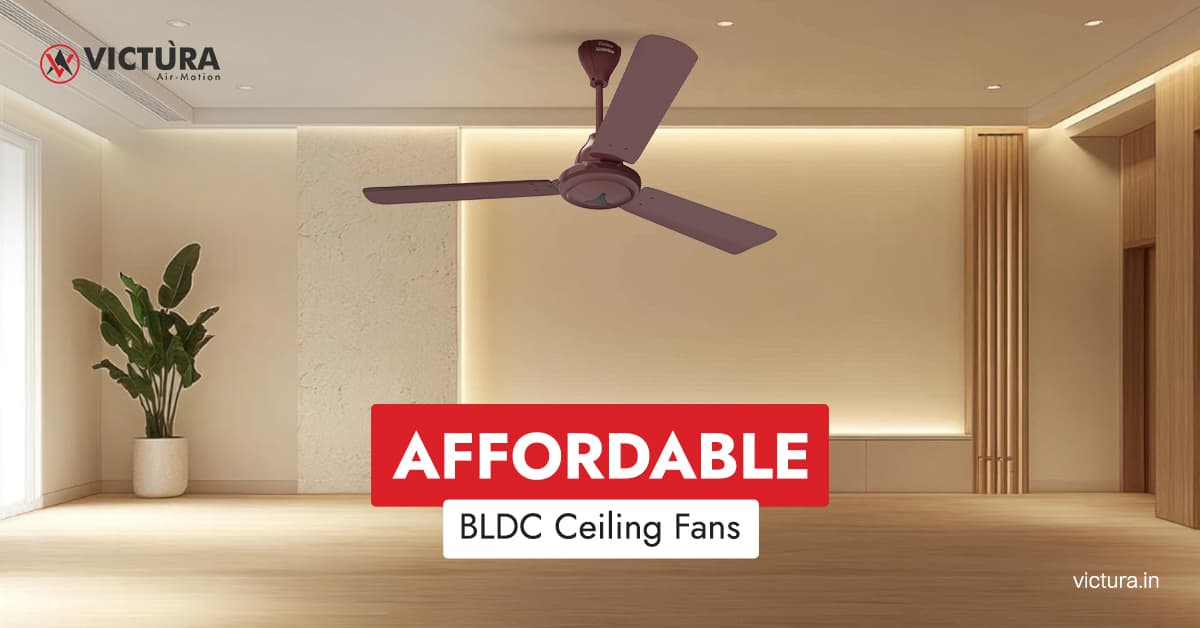
The most efficient BLDC Ceiling Fan Blade Design is essentially an aerodynamic marriage of a low-power, high torque motor unit with a great blade design (correct pitch, length, stiffness, and noise-reducing elements).
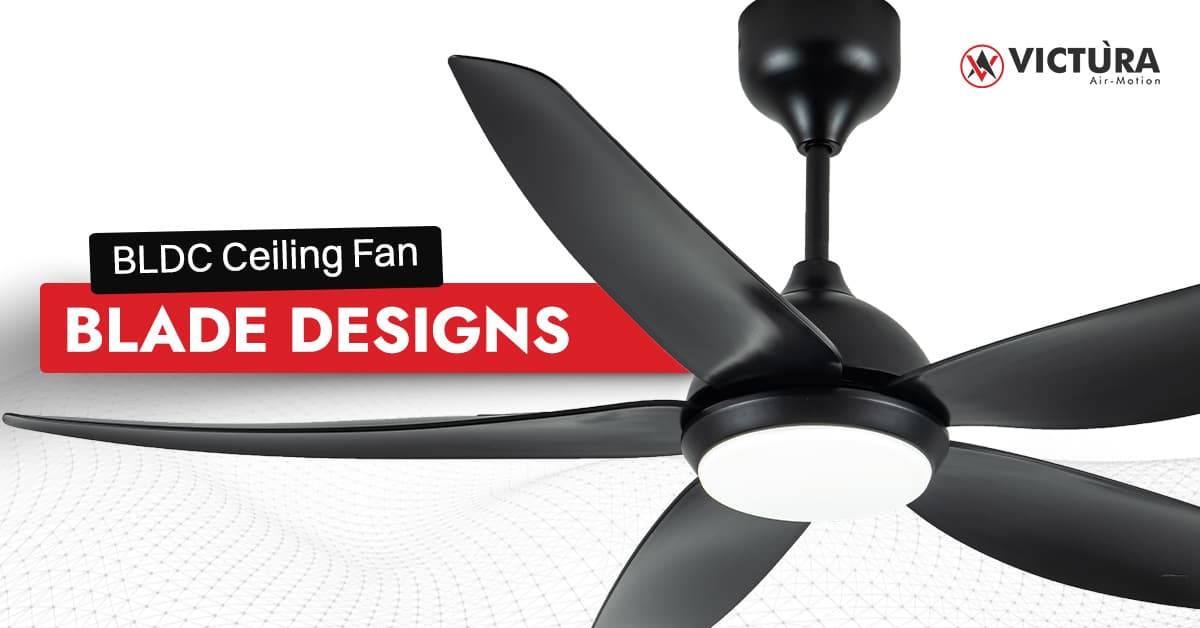
You might not know this but your BLDC Ceiling Fan Blade Design also influences cooling. Most of the buyers are only focused on the motor when they are buying the products; they check the wattage, compare brands, and look for the "BLDC" sticker.
However, here is the secret that manufacturers are not telling you loudly: the motor is only half the story.
It is as if you have a high-efficiency BLDC motor but with some poorly designed blades, you are essentially putting flat tyres on a Tesla. The motor may be efficient, but it cannot give you a nice, strong airflow of the correct temperature.
Indeed, saving energy while cooling is done through aerodynamics. The present article will explain the essential factors that make your ceiling fan blades effectively cool your room.
Every ceiling fan blade is a simple airfoil—the same cross-sectional shape used in aeroplane wings. This shape is designed to create lift, but in the case of a fan, it creates downwash, which is why the air is pushed downward to cool you.
The most important point for BLDC Ceiling Fan Blade Design is Blade Pitch, which is the angle at which the blade is tilted relative to the floor.
Too flat: If the pitch is too soft, the blade just goes through the air without actually moving much of it. The result is very little air movement and poor cooling even if the fan is spinning at a high speed.
Too steep: If the pitch is too severe (too angled), it generates a lot of drag. As a result, your BLDC motor has to be working much harder, energy is being wasted and the whole idea of the fan is being contradicted.
The optimal pitch of a modern ceiling fan is usually the result of a carefully calculated compromise and most of the time it is somewhere between 12 and 15 degrees. This "sweet spot" is what makes it possible to maximize the amount of air moved, keep the flow laminar and put less strain on the motor which is still efficient.
When we refer to a fan's size, we mean its Sweep Diameter (or span). This is done by just taking the length of one blade, doubling it (or measuring from one tip directly across to the other).
The main Coverage Rule has not disappeared; that is why it still exists: A bigger fan can, by a lower, quieter rotation speed, move a larger volume of air than a smaller one.
| Room Size (Approx.) | Recommended Sweep Diameter |
| Up to 10 x 10 ft | 42 inches |
| Up to 12 x 12 ft | 48 inches |
| Up to 18 x 18 ft | 56 inches |
Another element of BLDC Ceiling Fan Blade Design is the Taper Factor which indicates the blade's side from which the base to the tip changes.
The main reason for noise reduction with the correct tapering is that if the tip is too wide or poorly shaped, it produces a high-velocity air disturbance known as a tip-vortex thus increasing the 'whooshing' noise level dramatically.
Though most of the time the number of blades is decided based on looks, the number of blades essentially changes the fan's performance profile:
| Feature | 3-Blade Design | 5-Blade Design |
| Airflow | More coverage of air volume | Lower, but steady air movement |
| Efficiency | Optimal (lighter fan, less resistance) | Average (heavier fan, more resistance) |
| Noise | At full speed, the noise level is higher | Generally quiet |
| Best For | Living rooms, kitchens, maximum cooling | Bedrooms, quiet operation, aesthetics |
Ex: Glider from Victura Airmotion is a perfect 3 blade fan but if you want more blades, try Aeroflow from Victura Airmotion.
The material of the blade is equally as important as the BLDC Ceiling Fan Blade Design.
Since a brushless DC (BLDC) motor is characterized mainly by its low power consumption, the blades have to be as light as possible.
For example, lightweight ABS plastic or composite materials require very little torque and energy to start rotating and for keeping the speed, thus the motor can operate at its maximum efficiency.
Fan blades should be made of a material that is not only rigid but also resistant to deflection. Soft materials may "flatter" or become warped due to high rotational speeds or stress coming from the environment.
When a blade deforms, the pitch angle of the blade changes permanently, thus the efficiency of the fan drops, and the annoying wobble appears.
Ex: Victura Airmotion’s Aerowind is a great fan with ABS blades.
The reason why high-density polymers and composite materials are perfect is that they are less likely to be damaged and what is more, they are not affected by the presence of water vapor.
In a humid environment, wooden or low-quality plastic blades can take in water and become distorted. Thus, the balance and efficiency of the fan will be spoiled with time.
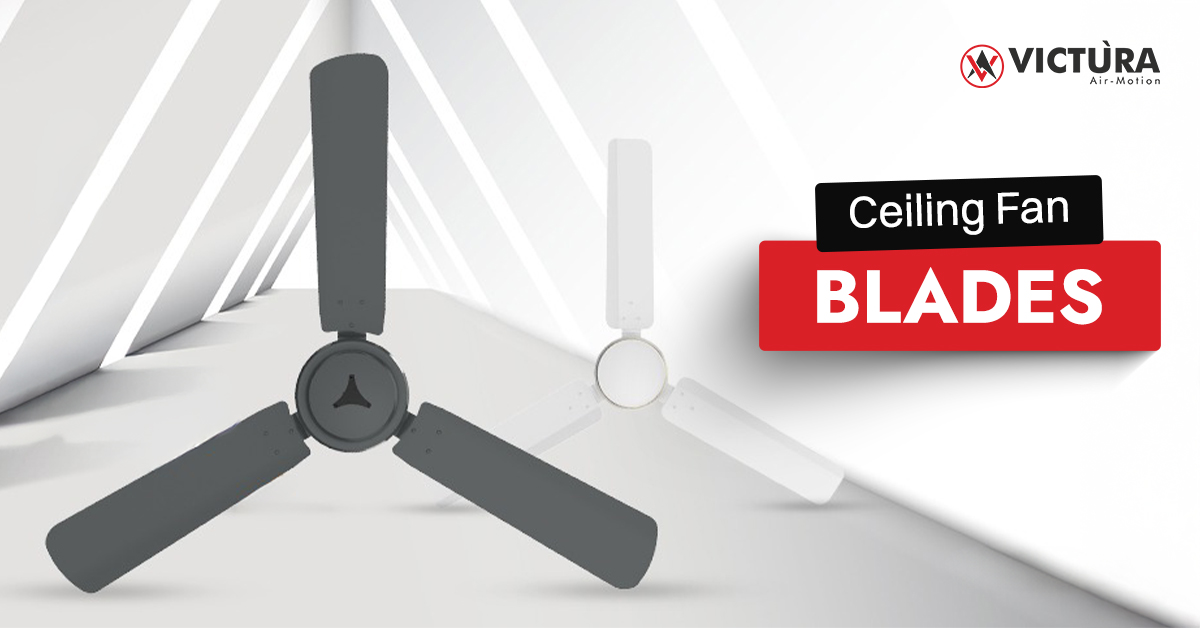
The most efficient BLDC Ceiling Fan Blade Design is essentially an aerodynamic marriage of a low-power, high torque motor unit with a great blade design (correct pitch, length, stiffness, and noise-reducing elements).
While shopping, do not merely compare the wattages but rather look at the real performance metrics:
Air Delivery Rate (CMM): It is the actual volume of air the fan expels that is given by this metric. The higher the better for cooling.
Noise Level: This is the ultimate confirmation of properly performed blade aerodynamics. The lower the better for a more comfortable environment.
When next purchasing a BLDC fan, visit the official Victura Airmotion website. Victura’s fan blades are designed to give you the best airflow.
Most air movement comes from good BLDC Ceiling Fan Blade Design such as an aerodynamic airfoil which combines the optimal Blade Pitch (usually 12–15°) with the right Sweep Diameter for a certain room. This combination is able to produce large volumes of air with minimum drag that eats up energy.
3 ceiling fan blades are the best. Which is probably why they’re the most common. These fans give good airflow. Unlike a 5-blade fan, it has less weight and drag, so it’s faster.
Pick models with 5 ceiling fan blades if you want super quiet airflow. These usually spin more slowly, giving a gentle breeze, perfect for sleeping areas. Watch for sleek curves on the blades or small upward edges at the ends; these help lower that sound.
Go with a fan that fits your space; larger areas call for larger blades. Smaller spaces are fine with compact fans instead. If your room’s roughly 12 by 12 feet, aim for a ceiling fan about 48 inches wide. For larger areas, pick one closer to 56 inches so airflow reaches everywhere.
One that’s not too shallow nor too steep (12-15°). As a result, a very flat pitch means that the fan is working at a low level and air is hardly moved, while a very steep one leads to an increase in the power consumption of the motor and drag generation. In fact, the right pitch is really about efficiency at high levels.
Go for stuff that’s light but super rigid: ABS or Aluminium materials. These help the energy-saving motor run smoothly, cut down on power use, also hold their shape for good in humid weather without bending or shaking.
Keep moving with bright ideas. From the way air moves to clever home hints, our blog is your place to dive into ease, style, and smart energy use.