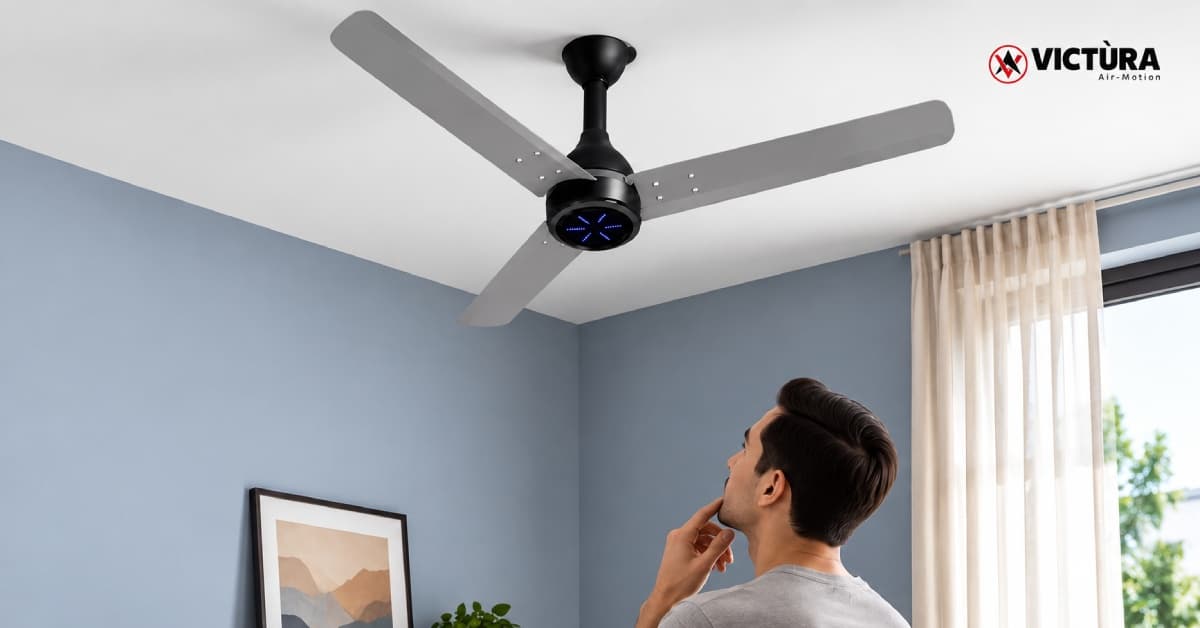
In living rooms and dining areas, fans with elegant finishes and streamlined blades enhance the overall aesthetic.
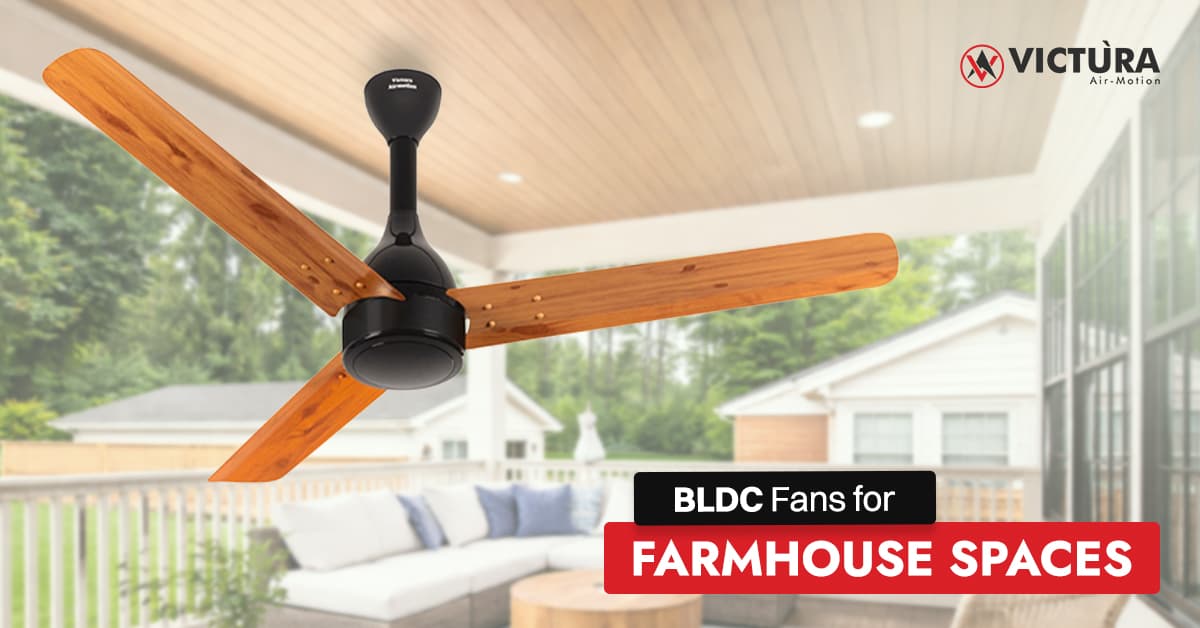
A farmhouse life has its own rhythm. Sunlight coming in the morning just through wide windows is the start of the day. The whole day is nothing but slow, warm, and relaxed. The night is like the daytime but the noise of nature is the only thing that is heard not only by talking, laughing, and wind, but also by nature.
In spaces like these, it is crucial to have comfort designed to your liking. And one of the most underestimated elements shaping that comfort is the ceiling fan.
Not just as a cooling device, but as a visual anchor. A silent companion. A detail that quietly defines what it’s like to live in a farmhouse.
This blog discusses how choosing the right fan in farmhouses can bring nature and aesthetics together in ways most homeowners don’t expect.
Farmhouses aren’t built like city apartments. They are built differently.
High ceilings, expansive rooms, large verandas, semi-open corridors, and indoor–outdoor transitions are part of the architecture. While this creates beauty and openness, it also means:
A regular fan may move air, but in a farmhouse, how it moves air and how it looks doing so make all the difference.
There’s a common misconception that higher speed equals better cooling. In farmhouse spaces, this logic often fails. What truly matters is air distribution.
Large rooms and high ceilings demand fans that can:
Modern BLDC fans are designed exactly for this purpose. They offer consistent airflow while consuming significantly less power, an advantage when fans run all day during long summer afternoons.
The result? A space that feels cool, calm, and breathable without the constant reminder of machinery working overhead.
In a farmhouse, silence is part of the charm. The distant sound of birds. Wind brushing past trees. Conversations that don’t need to compete with noise. A noisy fan breaks that harmony instantly.
Standard motors usually make humming, shaking, or loud noises that increase as time goes by. Conversely, the performance of the BLDC is almost silent, even during the fast rotation of the motor. The fan is not heard as an interruption but as part of the environment.
Once experienced, this quiet comfort is hard to give up.
In farmhouse interiors, everything is intentional: the wood textures, earthy tones, handcrafted furniture, and open layouts. A ceiling fan hanging at the center of the ceiling naturally draws attention.
This is where many homes compromise, installing a functional but visually mismatched fan.
The right fan, however, can:
Instead of standing out awkwardly, it anchors the room.
In living rooms and dining areas, fans with elegant finishes and streamlined blades enhance the overall aesthetic. In bedrooms, softer designs add to the sense of rest and retreat. On verandas, sturdy and weather-friendly fans extend comfort outdoors.
Farmhouses often run multiple fans across rooms, halls, and semi-open areas. Over time, energy consumption becomes noticeable.
BLDC fans change this equation entirely.
They consume significantly less power compared to conventional fans, making them ideal for:
Lower wattage doesn’t mean lower performance; it means smarter performance. You get steady airflow, reduced electricity bills, and peace of mind that comfort isn’t coming at a high running cost.
Farmhouse living isn’t confined to four walls. Verandas, patios, and sit-out areas are used just as often as indoor rooms.
Fans in these spaces face:
This is where build quality matters.
Fans designed with durable components and stable motors continue performing smoothly even in demanding conditions. They don’t slow down, overheat, or demand frequent maintenance.
Comfort remains uninterrupted, season after season.
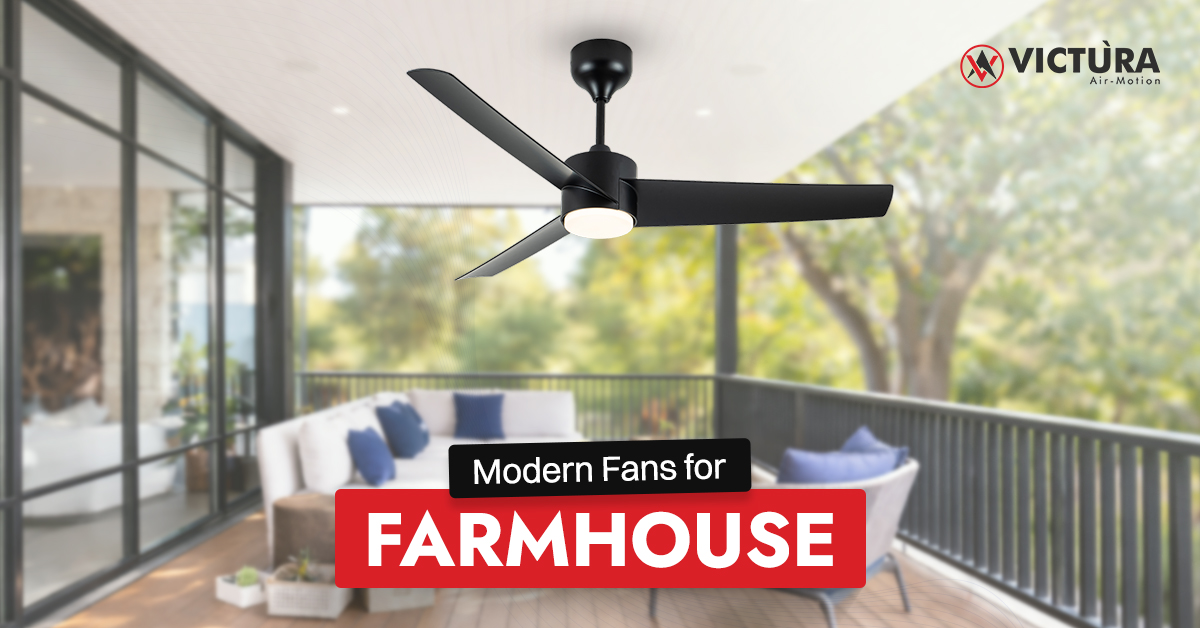
Go for fans with wider blade spans and strong air delivery. These spaces benefit most from consistent circulation that reaches every corner.
Here, silence and gentle airflow matter more than speed. Fans should support restful sleep without noticeable noise.
Durability is key. Choose fans designed to handle dust and extended usage while maintaining stable performance.
A balanced mix of aesthetics and airflow ensures comfort during gatherings without disrupting conversations.
Each space has its own rhythm. The right ceiling fan respects that rhythm rather than forcing a one-size-fits-all solution.
A farmhouse isn’t static. Furniture changes. Spaces evolve. Families grow.
The right fan adapts quietly to these changes. It doesn’t feel outdated. It doesn’t demand replacement every few years. It continues performing efficiently, blending into new layouts and lifestyles.
This long-term reliability is what transforms a fan from a purchase into an investment.
Farmhouse living, at its finest, appears to be free of effort. There is a natural flow of air. The atmosphere of the places is tranquil. The design is very thoughtful.
It affects how rooms feel during peak summer heat, how quiet evenings remain, and how visually complete a space looks.
With thoughtful design, energy-efficient technology, and silent performance, Victura Airmotion fans are built to complement the open, grounded, and elegant lifestyle that farmhouses are known for.
When comfort and aesthetics move together, living feels lighter and every breeze feels just right.
First of all, consider where the fan will go. Room size matters a lot here. Ceiling height changes how well it works. Airflow needs to shift depending on the space. Efficiency affects long-term use. Noise levels can disrupt calm environments. Design should match the room’s look. Open layouts, such as farmhouses, need extra attention.
Ceiling fans do have the benefits of air movement, people's comfort, less dependence on cooling systems, and a room's attractive look, all while using much less electricity.
Picking a fan means thinking about where it will go, inside or outside. Air movement matters, so check how much airflow the space needs. The strength of the motor plays a role too. Quiet operation might be key for some areas. How well it fits the look of the room makes a difference.
A room's size changes how a fan should work. Big spaces with tall ceilings need blades that stretch wide to move air well. Small rooms? A regular fan handles those just fine.
Ceiling fans with BLDC motors consume the least energy and at the same time can make the air move easily like a regular fan, but with much less power consumption.
You’ll know a fan is powerful when it gives strong airflow throughout the entire room with no rattling or vibrating sounds, even in the case of low speeds is an indication of a powerful fan.
Keep moving with bright ideas. From the way air moves to clever home hints, our blog is your place to dive into ease, style, and smart energy use.