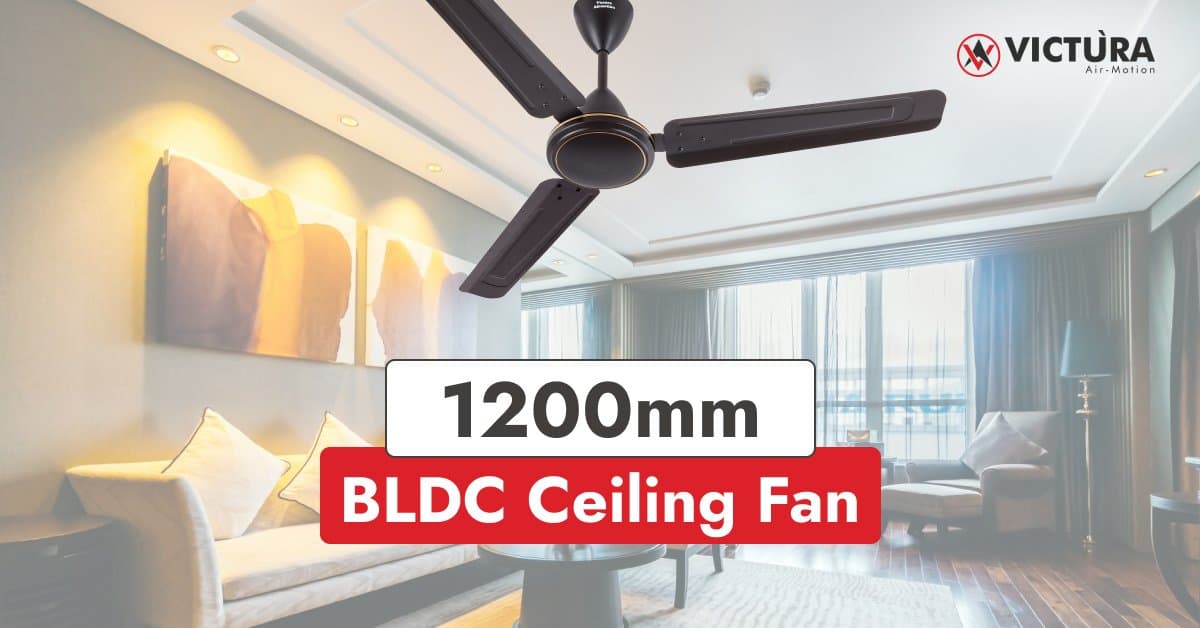
The presence of a fan in the room significantly increases the flexibility in terms of the temperature at which the AC may be set such that the setting can be shifted from an expensive 22°C to a comfortable 25°C.
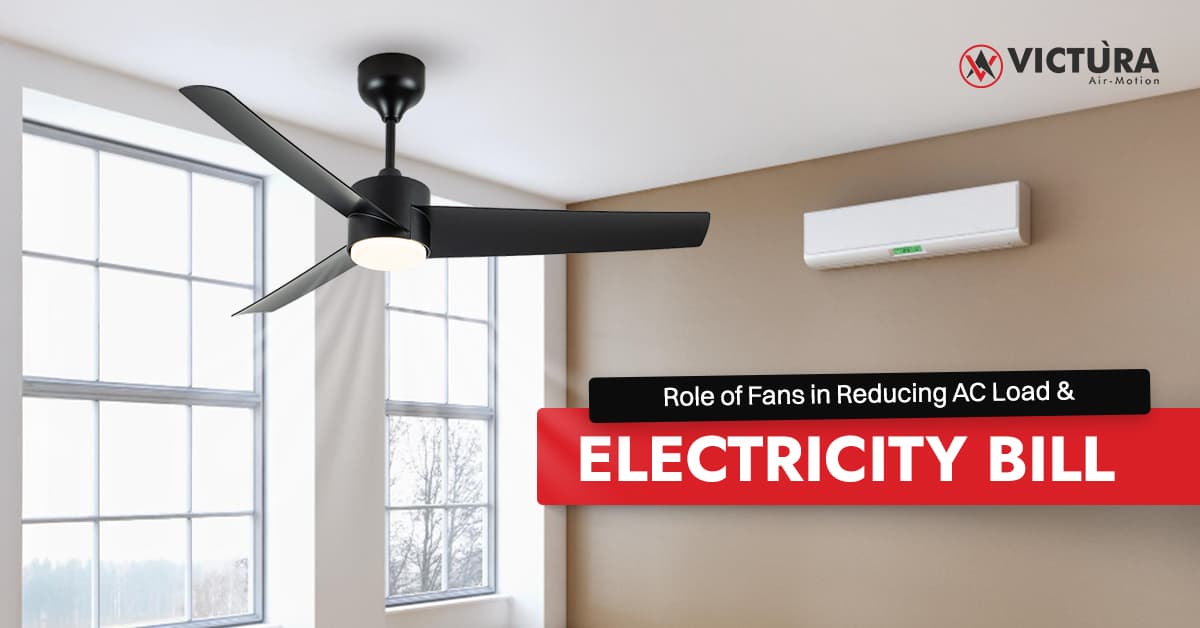
Imagine this: You look at your monthly power bill, and the gigantic amount of money that frightens you is almost entirely the cost of the air conditioner.
In the extremely hot period of summer, the air conditioner is a must, but the very large energy consumption of the air conditioner, which is mainly the compressor, can be the reason for your budget to go in the red.
But what if the cooling costs could be lowered substantially—by at least 20%—with no additional heat felt? The very simple and most overlooked way is the fan, which is used properly.
Fans do not cool the air; they make a wind chill effect that is fresher and thus, the AC can be used at a temperature that suits the budget and still gives cooling.
We’ll present the facts, the method, and the reasons why it makes perfect sense to take charge of your summer bills by simply getting an energy-saving BLDC fan.
It might be hard to believe, but your AC is actually a very efficient worker.
The very thing that generates the most heat in your typical situation is a refrigerant cycle, which is what your AC unit uses to draw both heat and moisture from the air inside your home and get rid of it outside.
This cycle requires an enormous amount of electricity, with the compressor being the primary source of it. The lower the temperature you set, the longer and more forcefully the compressor will operate.
Unlike fans, which are great energy savers, they are very simple in their operations. They only recirculate the air.
Moving air enhances one of the body's most primitive and still mysterious processes, namely, the very slight moisture on the skin's surface gets converted into vapor faster. This vaporization takes heat away from the human body.
The process is called the Wind Chill Effect. The moving air cools the body by constantly taking away the heat, which is why the body feels much cooler than the air temperature.
This phenomenon makes the person feel 4 to 8 degrees Fahrenheit cooler, even though the air temperature in the room remains unchanged.
The "Magic Number" for savings is the one that enables you to save about 3–5% of the cooling costs for every degree you raise your AC thermostat.
The presence of a fan in the room significantly increases the flexibility in terms of the temperature at which the AC may be set such that the setting can be shifted from an expensive 22°C to a comfortable 25°C (the body actually feels 22–25°C due to the fan).
In other words, the fan serves as a very economical power source that dramatically reduces your power-hungry AC compressor's operating time and load.
Optimizing your cooling is not only about having a fan; it is also about the manner in which you use it.
This is a step that cannot be compromised if you want to save energy during the summer. The ceiling fan must be in the mode referred to as Summer Mode, which means that the rotation should be counter-clockwise (if we are looking from below).
In this way, the fan draws air directly down toward the people, thus creating the required wind chill effect. (In winter, the fan should run clockwise, gently pulling air up to recirculate warm air from the ceiling.)
The fan should be placed so that it can take the cooled air from the AC unit and blow it throughout the room.
If the AC unit is installed on one wall, the fan will be of great help in distributing that cooled air; thus, there will be no areas of stagnant, warm air and the whole room will be at a consistent temperature.
On not too hot nights you may use fans to relieve your AC from its initial heavy load. Before turning on the AC, you can use a box or window fan in the following ways:
Starting the cooling off in such a simple way is what ensures that your AC will be able to do the heavy-duty work less often and that it will reduce its startup time significantly.
It doesn't matter if you are using your fan in a very efficient way; the fan could still be the culprit of a more expensive bill than you think if it is an old model. The way 4 ceiling fans consume power for 12 hours a day is as follows:
| Fan Type | Power Draw (Watts) | Daily Consumption (Units/kWh) |
| Old Induction Fan | 75 W x 4 fans = 300 W | 300 W x 12 hrs / 1000 = 3.6 kWh |
| New BLDC Fan | 30 W x 4 fans = 120 W | 120 W x 12 hrs / 1000 = 1.44 kWh |
With a BLDC fan, you are over 2.1 daily units of power wages at just fan usage alone! This summer, instead of three months, long term saving is a big win and getting your money back fast is the result that follows very quickly.
Also Read: Energy Saving Ceiling Fans for Eco Friendly Homes
When you add Victura Airmotion BLDC Fans to your homes, you get:
The solution to extremely high energy bills during summer is actually simple; it is cooling intelligently. You achieve an initial cost reduction of just one hour of coupling your AC with a fan.
Keep in mind the two effects at the same time: a fan allows you to lift the AC thermostat by 5-6 degrees, so for every degree you reduce your AC bill by 3–5%, you cut it by 5–6%.
Even more, by changing your old fan that consumes a lot of power into a new, efficient BLDC one, you reduce the power consumption of the fan by more than 50%.
This combined approach offers the best of both worlds: impeccable comfort and drastic bill reduction. A BLDC fan from Victura Airmotion is like a home energy upgrade which can hardly be outdone in terms of the payback period.
Yes, a fan with an AC should be used if one wants to keep the chilled air moving and also to have the saved power from the more than one equipment used. The fan draws in the cold air and makes it look like the chilled air is coming directly from the room.
Yes, but it is recommended that the fan blows indirectly on the baby, and the speed is low. The principle is thus, the fan and the air conditioner, and the fan, and the fan, will comfortably suit each other in the baby's room.
Fans paired with AC units let you set the cooler higher. Research points to compressors as top energy hogs, so when they run less, power use drops.
Fans are less costly than air conditioning. Apart from that, even the most ancient fans are more energy-efficient than an AC of the same capacity. The cheapest way to become adequately cooled is by using an energy-efficient fan and setting your AC at a higher temperature.
The fan does not cool the room but makes the room feel cooler faster by distributing the chilled air the AC produces. It is the most revolutionary technology that has just been found, in that the air is provided by the AC to every room of the house immediately, leaving no zone unventilated, and this greatly improves the cooling sensation.
Set your ceiling fan so that its blades are moving in a counter-clockwise direction (Summer Mode), thereby forcing the air down and projecting a breeze. For the utmost efficiency without sacrificing coolness, make sure to set the AC thermostat at least 4–6 degrees higher than you would normally.
Keep moving with bright ideas. From the way air moves to clever home hints, our blog is your place to dive into ease, style, and smart energy use.