Use fans only with control from a secure wall switch or remote control. The wall switch needs to stay out of your kid’s reach, while the remote ought to be stored safely once you’re done using it.
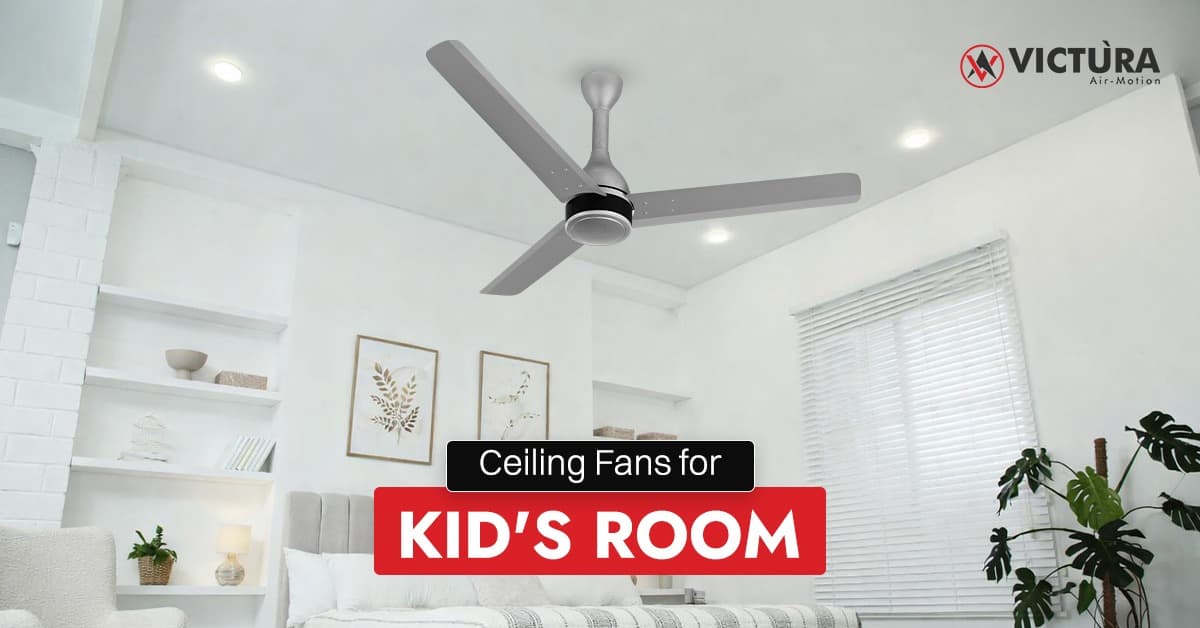
When creating a child's refuge, it is very important to first consider ways of air circulation and temperature control.
Using a ceiling fan to keep a room cool and fresh is a wonderful idea; nevertheless, for parents, that rotating tool above their heads is usually a cause of anxiety.
Is the fan too low? Can a little hand grab the blades? Is it safe? The danger of traditional or badly installed fans, e.g., a finger getting injured or the fan falling, is quite significant.
This manual stands as your final reference for the safety features that render a ceiling fan a safe and worry-free companion for your kid's room, instead of a source of danger.
By giving the right design elements the first place, you can guarantee the safety of your little ones during their sleep and play.
The first major hazard is the spinning blade. Fans designed with modern safety in mind have made significant improvements over the past.
Hugger/Flush Mounts
In rooms with standard or lower ceiling heights (under 9 feet), it is best to use a flush-mount (or "hugger") fan. Without a downrod, these fans are mounted directly to the ceiling; thus, clearance is at its maximum and the chance of accidental contact is at its minimum, which is very important if your child has a bunk bed.
Blade Material
Prefer flexible or soft-touch materials, such as plastic or fabric composites, rather than rigid wood or metal blades. These materials lessen the risk of an injury in the very improbable situation where the contact occurs.
Ex: Aerowind from Victura Airmotion has ABS (Acrylonitrile Butadiene Styrene) blades which are lightweight and child safe.
The stability of a fan is the most important thing. The quality of the motor and the mounting hardware used for the installation will determine the safety that can be maintained over time.
Safety Certification
Always ensure that the fan you are buying is safety certified by a recognized body. The certifications indicate that the whole unit has been tested to meet the safety standards set forth.
Mounting Hardware
Be sure that the mounting brackets are strong and heavy-duty. Fans should be fixed directly into a ceiling fan electrical box that is specifically designed for the fan's weight and movement and not into a standard junction box.
To avoid a fan that is loose or shaking and, in the worst case, can fall, it is better to get it professionally installed.
Motor Quality
A better-quality DC-powered motor is not only more energy-efficient and quieter, but it is also generally more stable due to its precision engineering, and hence less stress and failure of components will occur with time.
Ex: All Victura Airmotion fans are safety certified by Indian fan laws and are completely safe for use in kids’ bedrooms.
The manner in which the fan is used is one of the main safety issues, especially in terms of access to small children.
Wall/Remote Controls
Use fans only with control from a secure wall switch or remote control. The wall switch needs to stay out of your kid’s reach, while the remote ought to be stored safely once you’re done using it.
Remote Security
If your fan comes with a remote, secure the battery compartment using a screw. This keeps kids from prying it open and swallowing the cells.
Ex: Victura Airmotion’s BLDC fan comes equipped with a neat remote control for easy use and safety.
Safety requirements for a fan with a light also include those for the illumination kit.
Integrated Kits
Select fans in which the lighting system is completely integrated into the unit rather than a light kit hanging.
Diffused Light
Take a look at the models with strong and non-glass light covers (for instance, frosted plastic or polycarbonate diffusers). So, it’s less likely to crack.
Bulb Type
Go for LED bulbs that stay cool when lit. These use way less power, also, unlike old-style bulbs, they won’t get hot, so there’s far less chance of burns.
Ex: Fan models from Victura Airmotion, such as Aerowind, Aeroflow and Ecowind come with integrated LED lights.
Most of the time, a silent fan is a safe fan, which is a DC motor and a balanced fan. If a fan is quiet and it doesn't wobble, it means that it is well-balanced and properly installed.
If there is a lot of noise or vibration, it means that the fan is not balanced and therefore, it puts more energy into the motor and the parts of the mounting will be under that stress for a longer period of time.
Airflow Comfort
Check that the minimum settings of the fan give a light and comfortable breeze rather than a strong one, which is turbulent. A quiet breeze is better for air quality and temperature regulation which, in turn, leads to safer and better sleep for your child.
Ex: All Victura Airmotion BLDC fans are completely silent and give high airflow.
Picking a ceiling fan for a kid's room means that you have to look past the visual appeal and concentrate solely on the engineering and design.
The essential characteristics that you should require most are enclosed blades, flush mounting, a safety-certified installation, and remote-only operation.
Spending money on these safety features is not only about escaping an accident; it is about putting money into your child's general health by making a comfortable, restful, and safe atmosphere.
A safe fan equates to cleaner air, better temperature control, and, most notably, the owner's peace of mind.
Related Article: BLDC Fans for Childrens Rooms A Blend of Comfort Safety
Go for enclosed or caged designs to protect the blades. If you have low ceilings, pick a flush-mount fan. Select DC motors for a quiet and stable operation without pull chains.
Make sure it has a safety certificate. If it meets the safety standards, it means you can put it in your child’s room. Also, get a proper professional to install the fan. It needs to be done perfectly so there won’t be any accidents or hazards.
Pick ones with plastic blades like ABS. Go for styles you can run using a wall button or remote. Try those that have built-in LED lights since they stay cooler and won't break as easily.
Teach them not to put their fingers inside sockets, not to touch devices while they’re on (especially with wet hands), etc. Every child should be taught these things.
Yes, if they are exposed and are spinning. They can inflict deep cuts or even sever limbs. This is why enclosed fan designs are considered the safest for a child's room.
For safety reasons and according to most international building codes, the lowest point of the ceiling fan’s blades should be at least seven feet (2.13 meters) above the floor.
Keep moving with bright ideas. From the way air moves to clever home hints, our blog is your place to dive into ease, style, and smart energy use.