Learn the main ceiling fan components, their functions, and how they impact airflow, efficiency, durability, and performance.
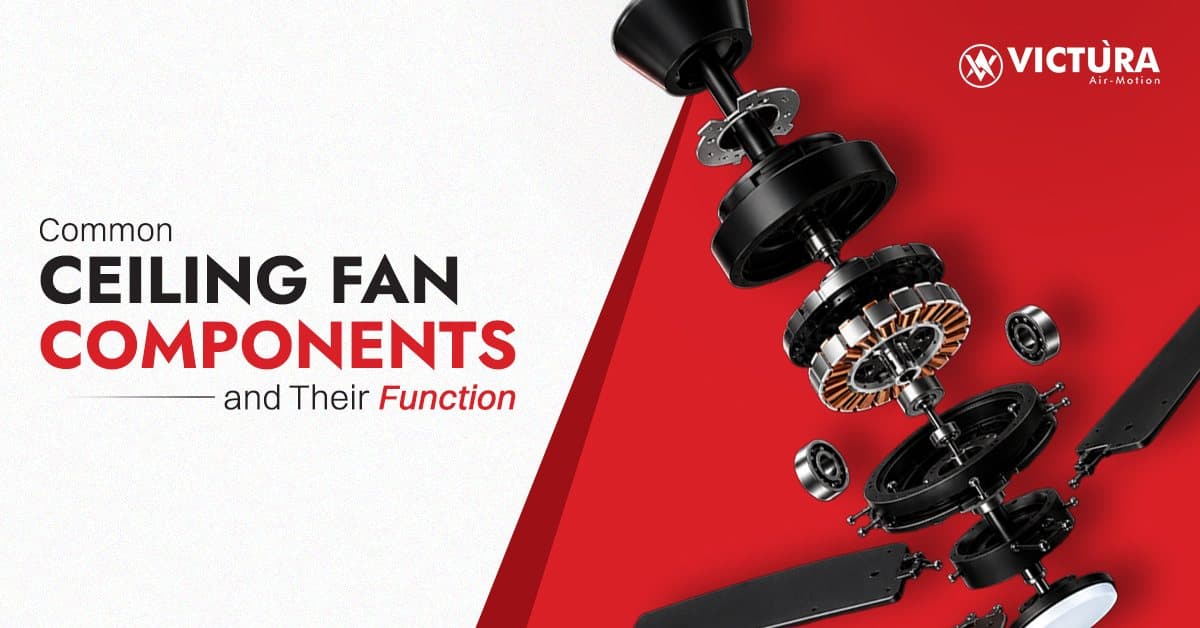
The internal mechanics of ceiling fans remain unknown to most people who use this common home appliance. The device appears simple because it combines multiple engineered parts that work together to provide users with comfortable and dependable operation.
The system requires all its components to function together because each element has a particular function that determines the total system performance.
The knowledge of these components enables customers to select their purchases more effectively while they recognize early warning signs of problems and they understand the true qualities that make a fan exceptional at its intended purpose.
Understanding how the parts function together enables you to select the appropriate fan based on your room dimensions and ceiling height. The system enables you to:
The efficiency, silent functioning and the extended lifespan of a ceiling fan depend on how its various components are fully designed and integrated together.
Function: Powers the fan and controls blade rotation
A ceiling fan operates through its motor which transforms electrical power into mechanical energy that drives blade movement to create airflow. Why does it matter? Well, the system:
Modern fans typically use either AC motors or BLDC motors, with BLDC motors offering higher efficiency, lower heat generation, and quieter operation.
What It Does: Move air within the room
The blades function to push air downwards while they operate in normal mode and reverse mode. Their design directly affects airflow efficiency.
Key factors:
Blades that designers create with proper design achieve effective airflow management which prevents excessive drag and sound production.
It’s Importance: Connect blades to the motor housing
Blade arms secure each blade to the motor and keep them evenly spaced
Why they exist:
Weak or bent blade arms are a common cause of fan wobble.
It’s Necessity: Positions the fan at the correct height
The downrod is the metal pipe that connects the fan motor to the ceiling mount
What is the purpose of it?
The system requires shorter downrods for low ceilings while high and sloped ceilings need longer downrods.
The Purpose: The device fastens the fan to the ceiling.
The mounting bracket anchors the fan to the ceiling structure and supports its full weight. It matters because the system:
High-speed fans and heavy fans require a reliable mounting system to maintain operational safety.
The Use: The device controls motor speed while providing initial starting power.
The capacitor stores electrical energy to power the motor during startup while it manages speed changes.
Role in performance:
A defective capacitor results in the motor performing at reduced speeds while producing humming sounds and experiencing starting difficulties.
Role: To protect mounting equipment and electrical cables through its overhead design.
The ceiling-mounted decorative element known as a canopy creates a visual barrier that parents and their children use to access suspended indoor spaces.
The system provides three advantages, which include:
The Operation: The electrical connections become unsafe because they develop a hidden appearance which makes them difficult to detect.
The Switch Housing system contains electronic control components within its designated
The switch housing system which is located beneath the motor contains wiring and receivers for remote-controlled fans and control circuits.
The system serves three critical purposes which include:
What It Does: The fan speed control system uses different control methods because it depends on the specific fan type.
The speed control system uses three different control methods which include
The system maintains efficient performance because it uses effective controllers that prevent power loss and motor system damage.
The System Needs: The components to function properly
The motor needs to use the bearings which help move its components with minimal resistance.
The performance effects include:
The fan operates for a longer duration because high-quality bearings function as the main component that creates silent operation.
The lighting kit exists to create illumination for its users. Some ceiling fans include integrated LED or bulb-based lighting systems. The system provides two benefits for users because it helps them save space and provides functional lighting.
The modern designs of the built-in system function with high energy efficiency. The installation of lighting kits usually occurs beneath the switch housing.
The study of ceiling fan basic elements shows how these components work together to create effective performance, lasting service and energy-saving capabilities. The fan maintains uninterrupted performance through its various mechanical and electrical systems which work together to achieve reliable operation.
The fan system operates with reduced noise while increasing its operational lifespan and maintaining constant air movement when its components receive proper design and installation.
Homeowners use this information to evaluate different products, solve basic problems and choose ceiling fans that provide long-lasting benefits. So if you get Victura Airmotion’s BLDC ceiling fans, you will appreciate the effectiveness of its components to work together as one system.
The fan system consists of its motor, together with its blades and blade arms and capacitor and downrod and mounting bracket, bearings and canopy and a speed controller. The system uses its different components to create airflow while maintaining stability and enabling smooth functioning.
The fan system requires both the motor and the capacitor to initiate its operation. The capacitor provides the initial torque required for the motor to begin rotating.
The capacitor enables motor startup while it maintains speed control through electrical current management.
The market offers common replacement parts which include capacitors, blades, blade arms, regulators and downrods.
A ceiling fan typically consists of 10–15 major components, depending on design and features.
Most fans share core components, but motor type, controller design, and electronics can vary by model and technology.
Keep moving with bright ideas. From the way air moves to clever home hints, our blog is your place to dive into ease, style, and smart energy use.