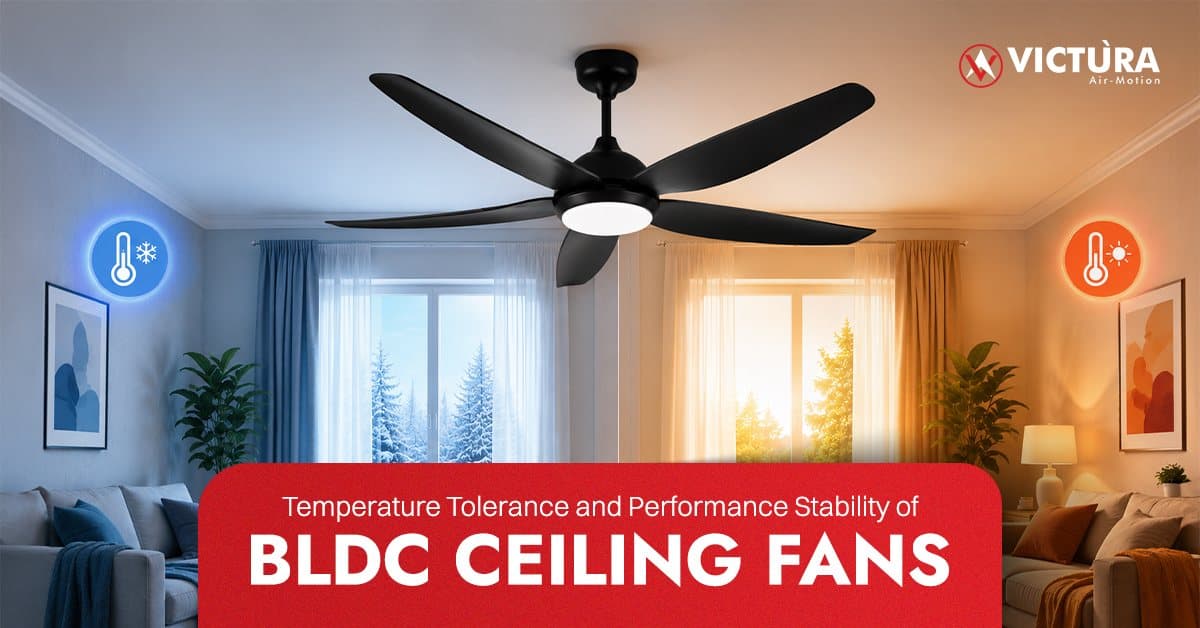
Temperature Tolerance and Performance Stability of BLDC Ceiling Fans: Learn how BLDC fans maintain efficiency, airflow, and reliability in heat.
People choose BLDC ceiling fans because these fans provide energy-efficient performance while operating silently and working well with current electrical systems.
The system provides power savings, but its main benefit exists in its ability to maintain operational stability under extreme temperature conditions and voltage changes.
The article demonstrates how BLDC ceiling fans function at different temperature levels while explaining the factors that influence their thermal performance and the indicators users need to assess their extended operational reliability.
The temperature tolerance of a fan system determines its capacity to maintain operational reliability through various ambient and internal temperature conditions without experiencing speed, efficiency or lifespan deterioration.
Ceiling fans produce heat through three main sources which include:
The performance of BLDC fans exceeds that of traditional induction-motor fans when they operate under specific conditions that require high-quality components and established thermal design methods.
Copper windings show increased electrical resistance when temperatures rise. The inefficient operation of improperly designed motors results in two negative effects which include decreased efficiency and increased heat production. The high-quality BLDC fans operate with:
Permanent magnets operate as the primary magnetic component in BLDC motors. The rising temperature causes a decrease in magnet strength which results in reduced torque. To counter this:
This ensures airflow and speed remain stable throughout the typical temperature fluctuations found in homes.
Control systems in ceiling fans require electronic components to run their operations. The electronic controllers function as essential components that maintain the fan's operation to handle different temperature conditions.
The BLDC driver system functions effectively when it has these protective components in the system, including:
The controller will limit its speed or activate a temporary shutdown when internal temperatures go beyond safe operating limits to protect the system from permanent damage.
The stability of performance improvement when controllers implement these two design methods:
The system uses sufficient heat sinking or thermal conduction paths that connect to the fan housing.
The operational speed of BLDC fans remains unchanged because they use electronic feedback systems to control their rotation speed. The controller maintains RPM stability by controlling current and switching patterns which work to stabilize system operation during both temperature increases and voltage changes.
The energy-efficient design of BLDC fans enables them to transform a greater portion of electrical power into mechanical energy while producing less waste heat. The process produces
Conventional fans experience balance problems because their mechanical components expand with temperature changes, which leads to noise generation. The operating stability of BLDC fans shows greater stability because of two factors which are their operating temperatures, their use of accurate motor control and their reduced mechanical component damage.
| Parameter | BLDC Ceiling Fans | Conventional Fans |
| Heat Generation | Low | High |
| Speed Stability | High | Affected by temperature & voltage |
| Thermal Protection | Built-in electronics | Usually none |
| Efficiency at High Temps | Stable | Drops noticeably |
| Component Lifespan | Longer | Shorter under heat stress |
The design and protection systems of BLDC fans make them more reliable than traditional fans because both systems handle temperature-sensitive electronic parts.
The temperature performance of a system depends on its installation requirements. The performance of BLDC fans reaches its maximum potential only under optimal installation conditions. The main requirements are:
The system needs to undergo routine cleaning because dust buildup creates a heat trapping problem. Proper installation methods enhance the system's ability to dissipate heat while extending its operational lifespan.
BLDC ceiling fans work with inverters because their internal design uses direct current. The system maintains power consumption at minimal levels while the motor operates at a fixed speed and produces very little extra heat.
The design of BLDC fans enables their operation in areas that experience frequent power interruptions and high temperature conditions.
Before purchasing, check for:
These indicators strongly correlate with better temperature tolerance and performance stability.
Ceiling fan reliability in hot climates depends on two essential factors which are temperature tolerance and performance stability. BLDC ceiling fans provide better stability than traditional fans when their design includes suitable materials and effective electronics and their operation includes thermal protection systems.
The system maintains steady airflow while operating at lower temperatures and delivers dependable performance under conditions that include high surrounding temperatures and power supply variations.
Victura Airmotion makes achieving maximum performance from a BLDC fan possible with both proper engineering of the product and correct installation procedures.
The operation of BLDC ceiling fans results in lower heat emissions when compared to standard fans because of their improved operational efficiency. The motor housing normally produces mild warmth, but excessive heat shows that the system experiences problems with ventilation, dust accumulation and electronic components.
The thermal protection systems of high-quality BLDC fans function when their temperatures reach dangerous levels. The fan will decrease its speed or stop working to safeguard its internal parts. This method protects equipment from permanent harm while increasing the operational duration of the fan.
The continuous operation of a BLDC ceiling fan remains safe for users. The fans operate efficiently through extended periods while experiencing minimal thermal stress. The system requires installation and maintenance through regular cleaning and proper ventilation to achieve reliable performance throughout its operational lifespan.
The fan operation requires both fan canopy and controller parts to receive adequate air circulation while all dust particles should be removed from the motor housing and users should avoid using sealed false ceilings while operating the fan at speeds which the manufacturer advises. These steps help maintain normal operating temperatures.
Yes. The design of BLDC fans enables their continuous operation in high temperatures because they require high-quality components and thermal protection systems.
Yes. The combination of inadequate ventilation and controller placement in enclosed spaces and dust accumulation problems creates heat dissipation barriers which force equipment to operate at increased temperatures. The system needs proper installation which will create stable thermal conditions.
Keep moving with bright ideas. From the way air moves to clever home hints, our blog is your place to dive into ease, style, and smart energy use.