Learn what an industrial exhaust fan is, how it works, its benefits, and how to choose the right industrial ventilation solution for factories and warehouses.
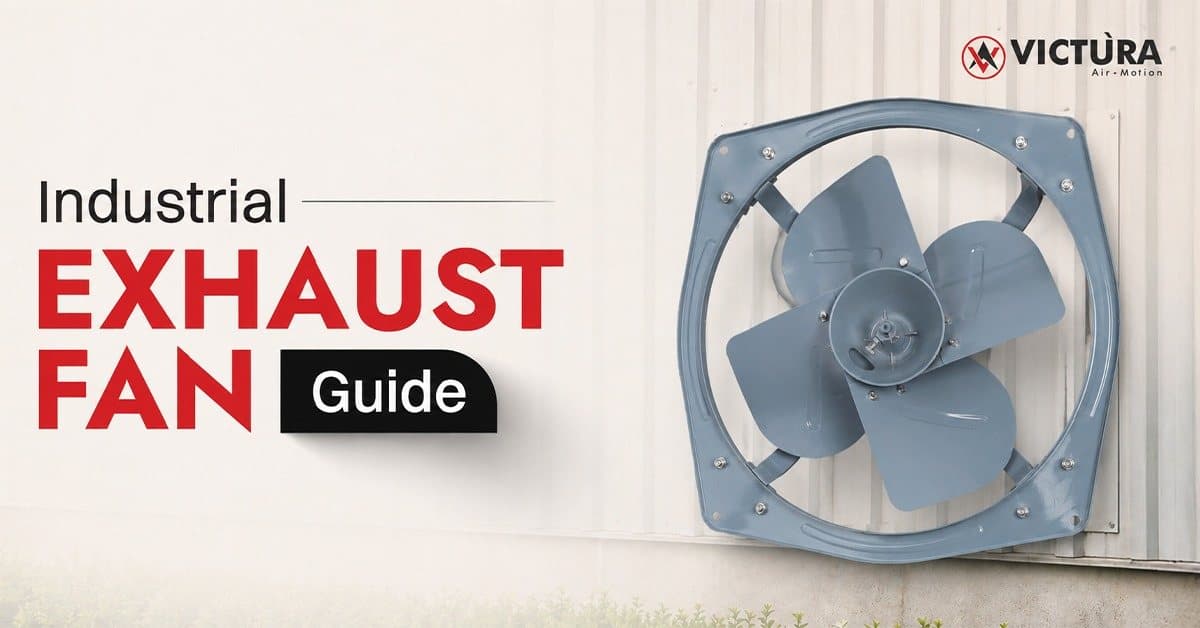
All industrial areas need an industrial exhaust fan, no matter if it is a production site, a storage room, or a very big cooking area. Without them, the atmosphere will be noticed before seeing the heavy machinery.
Heat, smoke, dust, and vapor are always present in industrial processes, and without proper ventilation, they soon become serious problems.
This is when industrial exhaust fans come into play or actually, they take over quietly. These systems, frequently neglected, are of utmost importance in controlling the air quality, protecting the workers and helping the machines to run smoothly.
Let’s take a look at what an industrial exhaust fan is and how it helps.
An industrial exhaust fan is a very powerful ventilation fan that is capable of expelling stale air, heat, fumes, dust, smoke, moisture, or dangerous gases from large, completely or partly enclosed areas.
The industrial exhaust fans are capable of handling huge volumes of air compared to household exhaust fans, which are designed for small volumes only.
You would commonly see them in:
Their main function is very easy to understand: removing polluted or overheated air and letting fresh air in as a replacement. But the by-products of that function are extensive, from employees’ comfort to safety regulations and even the duration of equipment life.
The industrial exhaust fan, at its very essence, is a device that employs an airflow and a pressure difference to work in an organized manner.
Heat, smoke, fumes, and dust particles build up in the vicinity of the operating machines and the workers. The fan, by creating a low-pressure area around its intake, catches this dirty air and starts a stream towards it.
The motor of the fan drives large blades or impellers. These blades, by rotating, exert a force on the air that is, therefore, blown out of the building. The air volume and pressure are dictated by the blade’s design.
The internal pressure decreases a little when the air is discharged. This pressure gradient automatically draws in clean air through the openings (doors, vents, louvers, or intake fans) thereby allowing circulation to happen continuously.
The bad air is sent out of the building through ducts, walls, or roofs, far from the people and machines.
This process goes on non-stop, and the indoor air quality remains in good condition throughout even the longest operating periods.
An industrial exhaust fan is like a blessing that turns a hot, horrid environment inside into a cool, blissful one:
With constant removal of fumes, smoke, dust, and old air, the workspace becomes cleaner and more pleasant for workers to breathe.
The heat produced by heavy machinery is quite substantial. The exhaust fans help control indoor temperature, thus making the working hours more bearable.
The process of ventilating removes gases and airborne particles which in turn positively impacts health and safety.
Good ventilation practices can help avoid the problems of overheating, moisture, and corrosion, thereby increasing the life of machines.
A comfortable working environment can enhance concentration, speed, and even the spirits of the workers in the factory area.
Proper ventilation is a must in many industries as it is a part of the safety and environmental standards compliance.
When it comes to selecting an industrial exhaust fan, it is not just a matter of size but rather the proper fitting of the fan with the working environment. A well-thought-out selection would mean performance and energy savings for the long term.
Determine if the fan will be dealing with heat, fumes, dust, smoke, or moisture, since every situation needs a different design.
Find out the volume of air that must be thrown out using the dimensions of the space and the degree of activity as the basis.
Choose between axial, centrifugal, wall-mounted, or roof-mounted fans according to ducting and pressure requirements.
Take into account the temperature, humidity, and corrosive substances that the fan might be exposed to.
A correctly designed fan will use less power during its continuous operation.
In areas where people are working, a quieter operation would have a positive impact on overall working comfort.
The application of premium materials and powerful motors guarantees reliability even in demanding industrial settings.
The choice of fan is based on:
An ill-selected fan might be noisy, waste energy, or even not perform its function at all. On the other hand, a properly chosen one would silently work for many years.
Industrial exhaust fans may sometimes go unnoticed in the background, but their impact on industrial zones is by no means insignificant. Constantly removing heat, fumes, dust, and dirty air, they contribute to the establishment of an environment that is healthier for the workers and safer for the machines.
When the right fan is selected and properly installed, it will lead to the support of production, the reduction of operational risks, and easier compliance with the safety standards. Knowing the workings of industrial exhaust fans will allow the decision-makers to invest wisely, thus guaranteeing long-term efficiency and reliability.
So if you want a properly ventilated industrial space, get Victura Airmotion industrial exhaust fans, the silent partners that are always there, working hard to keep the operations running without a hitch.
An industrial exhaust fan is a device to get rid of heat, fumes, dust, smoke, moisture, and contaminated air from large working areas thus maintaining safe, comfortable, and nicely aired environments.
They are responsible for the continuous removal of stagnated and polluted air thus simultaneously allowing fresh air entrance which results in a significant reduction of airborne contaminants and a prevention of harmful gases' buildup.
Of course, they are still a great help in humid climates since they eliminate extra moisture which in turn helps to control condensation, corrosion, and make the area uncomfortable.
The lifespan of industrial exhaust fans can be up to 10–15 years, or even more if the fans are installed properly, maintained regularly, and depending upon their usage and the environment.
You should put industrial exhaust fans in places like factories, warehouses, workshops, and commercial kitchens, where you notice the most heat, fumes, dust, or moisture.
The right size depends on the area of the space, ceiling height, type of pollutants, and required airflow. A proper airflow calculation ensures effective ventilation without energy waste.
Keep moving with bright ideas. From the way air moves to clever home hints, our blog is your place to dive into ease, style, and smart energy use.