Learn what to look for in a high-speed stand fan, including RPM, airflow, motor power, blade design, oscillation, noise, stability and energy use.
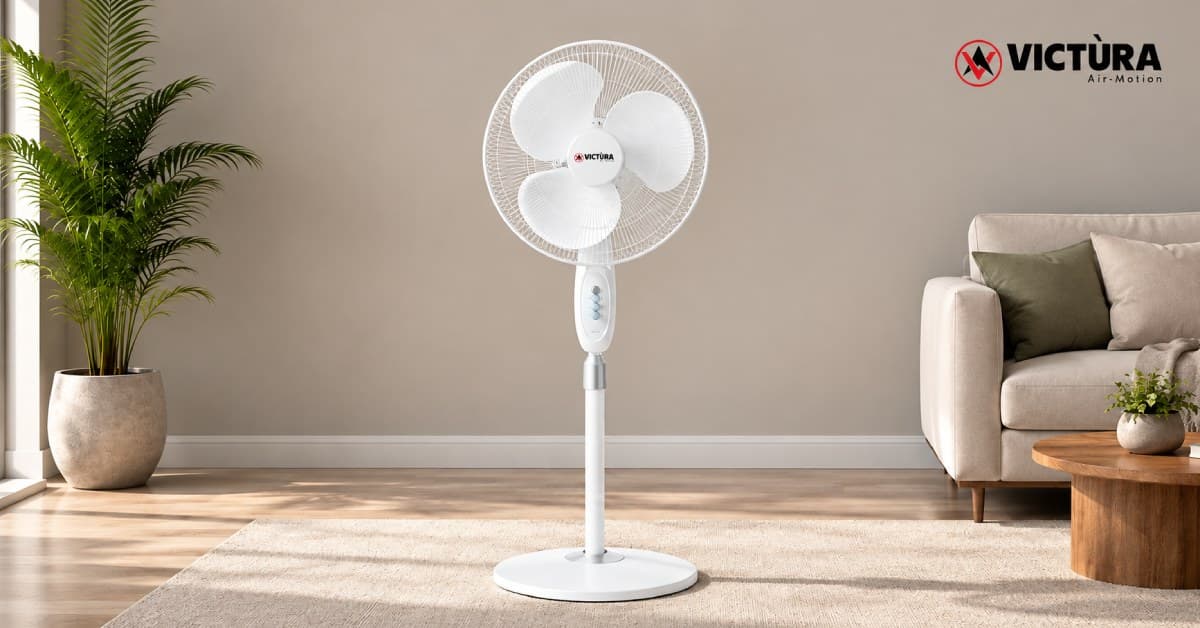
A high speed stand fan (also called a pedestal fan) serves as one of the most effective home, office and commercial space cooling solutions. The system provides better ventilation than fixed fans because it enables users to control airflow direction which delivers cooling to specific areas. However, different stand fans have different performance capabilities.
The selection process requires assessment of three specific factors which include speed, airflow capacity, motor quality and build stability. The components of a fan determine both its air movement capacity and the performance of its cooling system.
By understanding the key features that matter, you can select a high speed stand fan that provides powerful airflow, durability, and reliable performance throughout the summer months.
The RPM test serves as the first required examination of a high speed stand fan because it measures the rotational speed of fan blades through its Rotations Per Minute measurement system. Stronger airflow results from higher RPM levels, which enables the system to achieve faster cooling rates.
Standard pedestal fans usually run around 1300–1400 RPM, while high speed stand fan models can reach around 2100 RPM.
Faster blade rotation helps to distribute air throughout extensive areas. The selection of a high RPM stand fan will significantly improve your comfort when you require cooling for large rooms, halls, or open spaces.
RPM provides information about the fan's spinning speed while air delivery demonstrates the amount of air that the fan actually moves.
The measurement system uses CMM (Cubic Metres per Minute) as a metric for air delivery. The fan performance test shows that higher air delivery ratings enable the fan to distribute air throughout the space which leads to improved cooling efficiency.
The most effective cooling solution for large areas requires you to select a fan that delivers high airflow performance when you compare different models.
The motor serves as the essential component for every stand fan. A powerful motor ensures:
Fans with high-speed operation require strong motors because they must deliver constant airflow during extended periods without experiencing temperature-related shutdowns.
The continuous operation of the system needs models that provide stable performance when they function at high-speed settings.
The fan blade design materials directly determine how effectively airflow moves through the system.
The blade industry uses the following standard blade types:
Well-designed blades guide air smoothly across the room instead of creating uneven airflow. The special design of aerodynamic blades creates a significant benefit for cooling performance.
The fan head uses oscillation to create side-to-side movement, which extends air distribution to a larger space. The advantages of oscillation encompass these functions:
Numerous contemporary standing fans provide extensive oscillation capabilities, which distribute airflow evenly throughout indoor areas. This feature provides benefits for use in shared spaces, offices and living room environments.
Stand fans provide their users with the benefit of being able to adjust their settings.
A good high speed stand fan should offer:
Height adjustment allows you to direct airflow at seating level, bed level, or standing height depending on where cooling is needed.
Stand fans work well because they can operate in various indoor conditions.
The fan should produce low sound output during its operation at maximum speed.
A quality stand fan is designed to maintain stable airflow while minimizing vibration and noise. The presence of loud sounds indicates that the product has poor construction and its blades experience instability.
The selection of a quiet fan model will provide better comfort when you use the fan in bedrooms, study rooms and offices.
The design of stand fans requires them to operate with reliable stability because their fans exist to create airflow at high operational speeds.
The design of a fan needs to include these essential elements:
The stable design of the equipment prevents vibrations while maintaining safe operation during extended periods of equipment use.
High speed fans should provide multiple speed options because they need to deliver multiple speed settings instead of offering only one high speed option.
The available speed options include:
Multiple speed settings allow users to control airflow intensity based on temperature and comfort needs. The improved flexibility between two variables leads to better comfort conditions and more efficient energy use.
The testing process requires assessment of power consumption before fans can be purchased by customers.
The typical power range for most pedestal fans extends from 50 to 75 watts which enables users to achieve optimal airflow results while keeping their energy consumption under control.
Energy-efficient fans provide users with all-day comfort while keeping their electricity expenses at a manageable level.
The process of selecting an appropriate high speed stand fan for enhancing indoor comfort during warm weather requires testing multiple factors that affect cooling performance through their impact on three different fan components.
The combination of speed, airflow capacity, motor strength and blade design and oscillation determines the fan's capacity to create a cooling effect inside a room. The daily operation of a product depends on its performance stability, noise production and its capacity to adjust different settings.
By focusing on these essential features before purchasing, you can select a stand fan that delivers powerful airflow, consistent performance, and long-lasting reliability. Choose a high speed stand fan from Victura Airmotion that provides effective cooling abilities while maintaining comfort during daily activities.
The optimal fan selection requires choosing a fan that operates at high RPM while delivering strong airflow through its powerful motor and provides height adjustment capabilities. The combination of oscillation functionality and multiple speed options enhances both airflow performance and user experience.
Cooling performance improves when users assess airflow capacity together with motor power, blade design, base stability, noise level and adjustable settings.
The standard airflow range for an effective standing fan operation reaches between 1500 and 3000 CMM. The stronger airflow capacity from higher CFM rates provides improved cooling efficiency for larger spaces.
The optimal pedestal fan for residential spaces provides powerful airflow together with silent functioning, durable construction, height adjustment and multiple speed settings.
Essential attributes of a stand fan include powerful airflow capabilities and durable blades together with oscillation functionality, adjustable height, stable base and various speed options.
Pedestal fans operate between 50 and 75 watts which makes them suitable for energy-efficient home cooling during normal daily activities.
Keep moving with bright ideas. From the way air moves to clever home hints, our blog is your place to dive into ease, style, and smart energy use.