Learn why copper winding matters in ceiling fans. Compare copper vs aluminium winding, motor efficiency, durability, heat management, and long-term performance.
Most of the time, a ceiling fan is chosen based on its design, airflow or electricity consumption. Nevertheless, one of the most crucial factors for the motor’s long-lasting performance still remains obscured: the winding material.
The winding type used affects the performance of the motor in terms of efficiency, heat production, durability, noise and life cycle. Copper and aluminium are the two main winding materials and the distinction between them becomes clearer after years of use rather than at the point of purchase.
One can make more informed and thus better decisions about winding material and performance that lead to no change in airflow, less energy used and a longer life of the product.
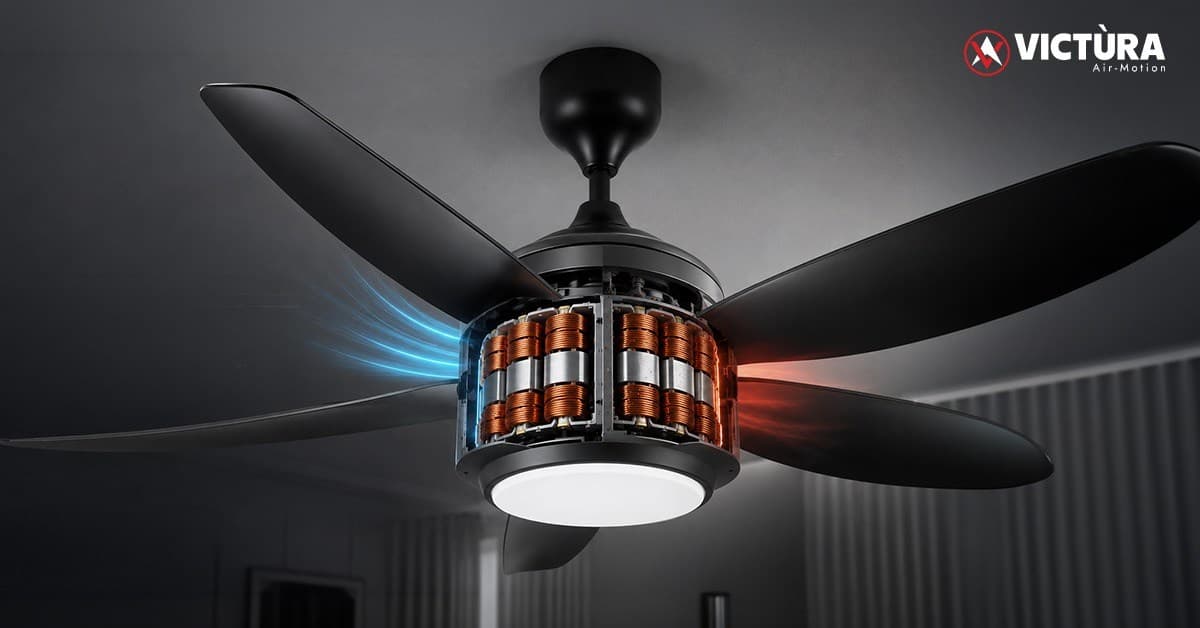
A ceiling fan may appear uncomplicated from the outside: blades, rod, and canopy. However, the motor is carrying out the tough task inside. The winding, the coiled wire that transforms electrical energy into uniform, rotating motion, is the starting point of that motor.
Consider the winding material as the vascular system of the fan. When it is powerful, effective, and secure, the fan will operate silently for many years. When it is weakened, issues won’t be apparent right away but they will definitely surface at some point.
This is the reason why winding material is of such great significance that it is hardly noticed by the majority of people.
In most cases, the windings of ceiling fans are made of copper or aluminium wires. According to the theory, both of these materials have the ability to conduct electricity. However, practically speaking, they are very different.
Copper is one of the oldest materials used in electrical motors and the ones that are still most common.
It has the following properties:
The copper-wound motor gets its work done without the need to put extra effort. Eventually, this results in constant speed, quieter operation, and fewer breakdowns.
Aluminium is a metal that is lighter and cheaper than copper. Thus, it is often used in low-cost fans and is the reason behind its presence in the fan industry. But it comes along with drawbacks:
At first, the fan may feel okay. However, after some months and years, performance loss and repair will be the only option.
Projecting heat is a universal characteristic of electric motors. The concern is how well the motor can control that heat.
Copper windings have a very low resistance which allows the current to flow easily, thereby producing less heat. There’s problems with the aluminium motor:
Consequently, the poor quality fans with inferior winding material often come to a sudden stop. The destruction of the insulation is gradual, unnoticeable, and in the end, the motor cannot be repaired.
Wattage or star labels are usually the main focus of the discussions about energy-saving fans. Meanwhile, the winding material is the one that decides how much power would be consumed by the fan and how long it would last.
The copper-wound motor:
In contrast, an aluminium-wound motor often begins to draw more power over time just to keep the same speed, something that most households might not even realise until the electricity bills are higher.
The real efficiency is not only about how the fan works on the first day, but also how it works after five, seven, or ten years.
For households that heavily depend on inverters during power interruptions, the quality of the winding becomes a decisive factor.
Motors made of copper-winding are more resilient against:
Poor quality windings are unable to take the inverter power, resulting in slow speed or frequent shutdowns. Eventually, the motor life is greatly reduced due to the stress caused over time.
At the outset, looking from the outside, fans with aluminium windings might seem to be the cheaper option. However, the hidden costs will finally sum up:
When you are ready to spend on the fan that has the best quality copper windings, you are not making a luxury choice but rather a long-term reliability, safety, and value choice.
This is the way of thinking that Victura Airmotion has in fan engineering, which is focusing on longevity, not quick selling.
The material for the winding is the deciding factor that determines the performance of a ceiling fan throughout its entire life. Copper and aluminium are both electrical conductors, but their action during continuous use varies greatly.
With lower resistance, better heat management, increased efficiency, and longer motor life, copper wire is the type of winding that will easily handle the daily operation of the fan.
On the other hand, aluminium windings may cut down on the initial cost but they usually cause higher temperatures and quicker performance degradation.
So, if you’re planning on buying a copper motor fan, check out Victura Airmotion.
Copper windings in fan motors are the material that gives better performance and longer life.
Using pure copper and aluminium for windings in a ceiling fan is the one that have resistance of all others.
Motor efficiency, blade design, blade pitch, air delivery (CFM), power input, voltage stability, and proper installation height are the main factors influencing fan performance.
Adjusting the height of the installation, cleaning the blades, providing a stable voltage supply, and using an efficient motor with well-designed blades can greatly enhance the performance of the fan.
The bad fan motor or capacitor can be indicated by the following: slow startup, reduced speed, humming noise, overheating, or the fan stopping intermittently. These signs are mostly indicative of motor wear or a failing capacitor.
The ceiling fans with an RPM of 300-380 at top speed are the most silent ones while still providing effective air circulation.
Keep moving with bright ideas. From the way air moves to clever home hints, our blog is your place to dive into ease, style, and smart energy use.