A quiet wall fan is a clever, contemporary way that not only saves your room space and reduces your electricity consumption.
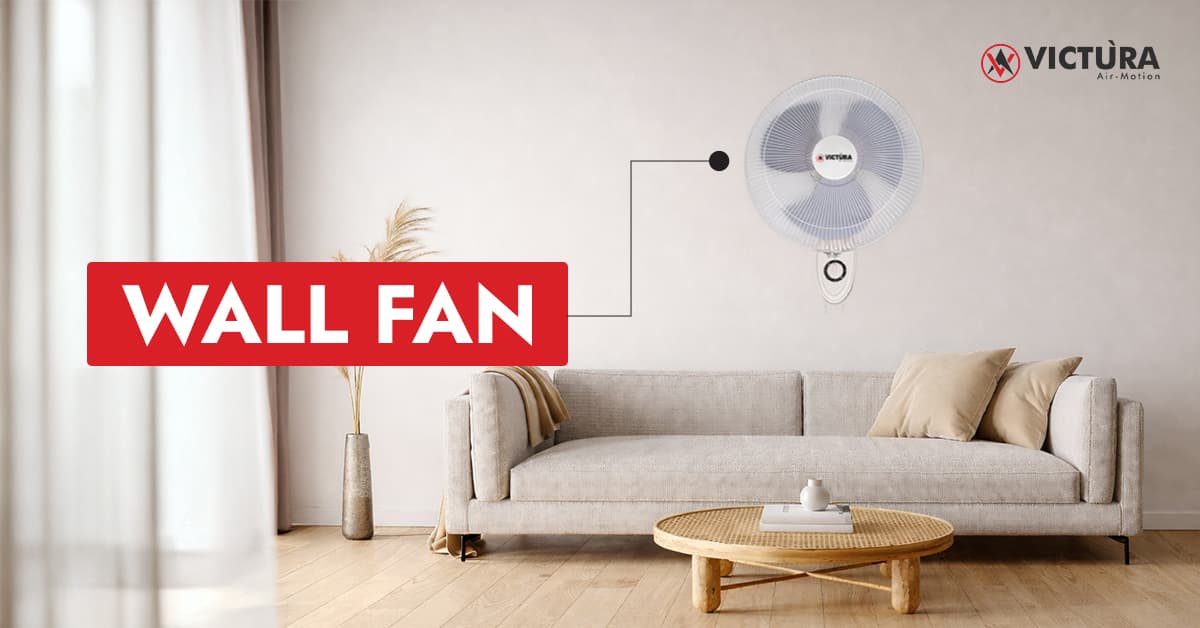
A Wall mounted fan is an ideal integration of energy-saving, easy usage and peaceful features. The noise caused by the rotating blades or the motor in traditional fans, although they cool quite well, very often disturbs people's sleep or concentration. Thanks to the newly developed silent wall fans, this type of inconvenience is almost totally eliminated. These kinds of fans are able to perform a powerful and regular air intake without the hardly noticeable sound accompanying them, and they take up a minimal amount of space in the room.
So, let’s get further into the blog to see which one you need.
The benefits of locating a wall fan not only include the saving of valuable floor and desk space but the benefits will increase dramatically if you also take into consideration the low-noise sound of the functioning piece of equipment:
The noise of the engine of home appliances might be a cause of poor or light sleep. The fan emits a low noise only and will not create a noisy environment, so sleep will come easily.
A great opponent of productivity in any workplace or study room is an unavoidable distraction. To keep the office environment warm or cool and co-working friendly, a quiet fan is of great help, while the by-product, the noisy buzz, is eliminated.
Quietness is a trade-off to performance they say. Still, these days fans of modern times come with improved aerodynamic blades and high-performance motors that make fan functioning smooth and air circulation complete without the room having to be too noisy and stuffy.
Many low-noise wall fans, especially those equipped with a BLDC motor, are much more energy-saving compared to those with an AC motor. Accordingly, the end user gets a cool room and a lower electricity bill at the same time.
When selecting a silent friend for your wall, do not forget these must-have features:
Some wall mounted fans are very energy efficient; they can consume less electricity, which makes them the best of the bunch when it comes to energy saving.
One should look for the CMM mentioned in the specifications of the product and aim for 75–110 CMM or more for a gust-like experience.
A good sweep size is absolutely necessary for ease of use, particularly when a fan is mounted in a high position.
The option of variable speeds is indispensable. A very quiet, low speed can be used for sleep or gentle cooling, whereas at the higher speed, the noise production will be less but the acceleration of the air circulation will be faster.
Great oscillation lets the air be distributed over a large area, and an adjustable tilt head gives you the liberty to direct the air right where it is necessary, for instance, over your bed or the table in your room/workspace.
Where you place your wall fan can greatly affect not only its ability to cool the room but also the noise level of the fan:
Make sure the fan is mounted tightly to a solid wall stud or with suitable anchors. A loose installation can cause the fan to vibrate and thus increase the noise of the motor.
Set the fan at a height where it is above your head and the air can be blown over a large area but if you need to you can still adjust the tilt manually. The higher point naturally helps to push the air further than a fan placed on the floor will do.
Are there any ‘shiny’ surfaces in the room? A large mirror, a glass door, etc? If yes, then don’t point the fan that way. It can make the noise louder.
Your fan needs to be cleaned at least once a month. Especially if you use it often, but either way. Dust and dirt get settled which need to be rid of.
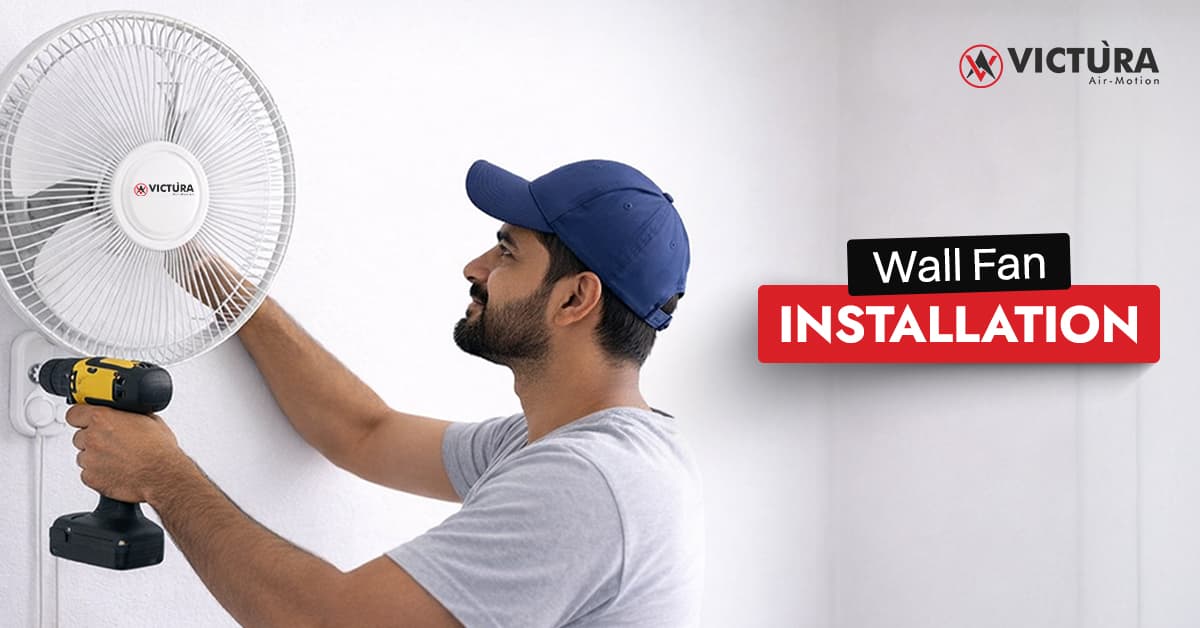
Wall fans are a great space saver, but proper installation is the main factor that determines whether the fan will continue to function quietly and at its best.
In any case, try to attach the fan directly to a wooden stud or, if that is not possible, use heavy-duty wall anchors.
A weak mounting surface will vibrate and thus increase any motor vibration.
Set the fan about 6.5 to 7.5 feet (2 to 2.3 meters) from the floor. At this height, the fan can move air over people's heads, thus providing full-room circulation.
Moreover, the blades are at a safe distance from the children.
If you want a quieter and more natural whole-room effect (a bedroom, in particular), then turn the fan so that it blows against a wall or the ceiling instead of directly at you.
What this does is it provides indirect, circulating airflow that is less intense and also tends to be quieter.
With the continuous improvement in fan technology, the problem of choosing between effective cooling and a quiet environment is no longer relevant.
A quiet wall fan is a clever, contemporary way that not only saves your room space and reduces your electricity consumption but also, and most importantly, lets you keep your valuable quiet time.
Whatever you need: deep sleep, good focus, just general comfort, purchasing a low-noise, wall mounted fan from a company like Victura Airmotion is a smart move for your comfort and health.
Definitely. A wall-mounted fan is a good option. A wall fan basically helps to save space (which can be used for the floor or desk), delivers the air where you want to, and is, in general, safer around kids and domestic animals as it is mounted high. Also, new models are still energy-efficient.
Certainly, a wall fan can be very useful in a bedroom. It saves space and you can direct the air flow to cool you personally.
Long-term side effects (which may be caused by any fan) are that dust and allergens may be stirred up and mild symptoms such as dry skin, dry eyes, or a stuffy nose may appear if you are exposed to the air directly during sleep.
Wall fans are usually very energy efficient. The traditional ones consume between 40 to 60 watts of power. Modern wall fans are highly efficient;they can consume as low as 30 watts or even less thus making them a very cheap cooling option.
Ceiling fans are good for covering large areas while wall fans are good for more of a focused cooling effect. So, it all just depends on your needs.
Decide first according to the size of the room (sweep/CMM), then choose a fan with a high speed, good sweep, low wattage, colour options, oscillation and adjustable tilt.
Keep moving with bright ideas. From the way air moves to clever home hints, our blog is your place to dive into ease, style, and smart energy use.