Learn how to choose the best wall fan for modern office spaces. Discover key features like powerful airflow, quiet operation, energy efficiency, and durability.
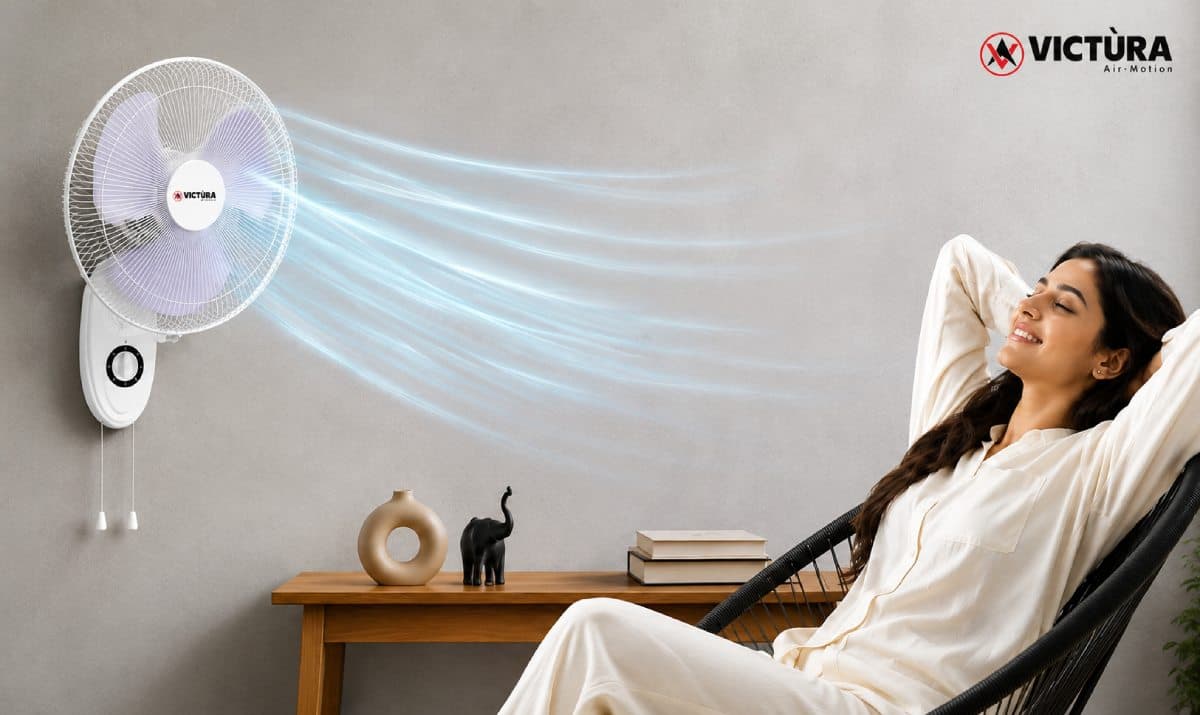
Proper selection of a wall fan for contemporary office environments needs assessment of their operational capabilities, their energy consumption performance and their operational capabilities.
Proper air movement creates a comfortable atmosphere that enables employees and visitors to work at their best in offices that need both comfort and work efficiency. Wall fans provide an effective cooling method that requires less space than other systems while they maintain steady wind distribution throughout office environments.
Different wall fans provide different levels of energy efficiency, product longevity, and operational capabilities. The total performance of a system depends on several factors which include its airflow capacity, noise production, energy usage, ability to oscillate and construction standards.
Let’s see how organizations can evaluate essential components when choosing the best wall fan.
The design of office spaces needs to support three main objectives which are clean design, functional space utilization and proper workstation arrangement. Wall-mounted fans fit perfectly into this environment because they provide cooling without cluttering the floor.
The primary benefit of wall fans comes from their ability to save space which maintains clear walkways while stopping equipment from falling over.
The system delivers focused airflow which allows air currents to reach particular working zones, thus creating better thermal comfort for employees without impacting the entire workspace.
Key benefits include:
The correct airflow system enables busy workplaces with shared spaces to experience better employee comfort and work efficiency.
The main factors before choosing the best wall fan should be examined first.
The most important factor in choosing the best wall fan is its ability to circulate enough air for the size of the room. The fan's airflow capacity is measured through CMM which shows the volume of air the fan can distribute.
Office spaces that have larger dimensions require fans that deliver greater airflow capacity to achieve proper air distribution.
For example:
The correct airflow selection enables proper cooling throughout every area of the room.
Present-day office environments contain several workstations together with different seating locations. The wall fan utilizes oscillation to move air through the entire space, which enables the fan to distribute air throughout the entire room.
The machine uses oscillation to distribute air because it produces multiple airflow routes that lead to better cooling results.
High-quality wall fans typically come with these additional features:
A low-noise wall fan for an office is essential. The measurement system for noise levels uses decibels (dB) to define sound intensity, which determines that quieter models work better in professional spaces.
Look for fans with a system that:
The silent fan provides non-disruptive comfort to workers.
Energy efficiency serves as a critical requirement because offices operate their fans continuously throughout their working hours. Energy-efficient fans provide electricity savings through their ability to maintain steady airflow throughout their operation.
The assessment of energy efficiency requires the evaluation of the following factors:
The efficient fan operation delivers cost savings throughout its life cycle while promoting eco-friendly office operations.
Different office situations require different airflow levels. A gentle breeze provides sufficient airflow during cooler hours, whereas hotter afternoons need stronger airflow. The wall fan should provide multiple speed settings that enable users to control airflow based on their personal comfort needs.
Typical speed options include:
The fan maintains its daylong usefulness because of this adaptability.
The operational needs of office equipment determine that its essential durability requirement must be met.
A high-quality wall fan should have:
The operational performance and lifespan of fans improve when manufacturers produce them with dependable materials.
Safety is essential in shared workspaces where many people move around throughout the day.
The essential safety features for protection include:
The design of these features enables wall fans to operate safely in regular office environments.
Modern offices now prioritize their interior spaces and their visual elements because these elements create their desired workplace appearance.
Wall fans now come in modern office spaces as slim wall-mounted fans that match current workplace design standards. The workspace design selection process establishes the fan design which matches the complete workspace design.
Designers commonly evaluate these fundamental elements in the design:
The design of a fan shows how it functions to improve the professional appearance of an office space.
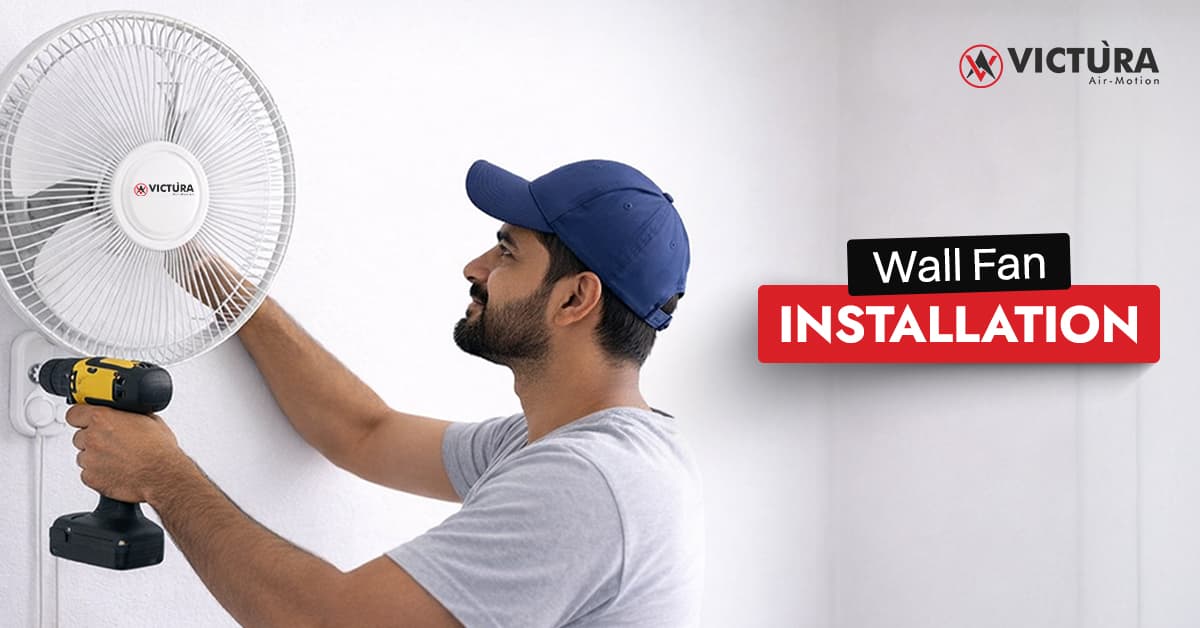
The installation process and the maintenance process should both be simple for wall fans.
The majority of products include installation packages that contain both mounting hardware and user manual documents for product setup.
The maintenance process requires only two tasks which involve:
Office operations reach their highest efficiency when staff members use equipment that requires little upkeep.
The process of choosing the best wall fan for contemporary office environments demands assessment of four key factors which include airflow capacity, noise production, energy consumption and product aesthetics. A well-chosen wall fan not only improves air circulation but also enhances employee comfort and productivity.
Offices can establish an effective cooling system that provides comfort and operational effectiveness by selecting equipment that includes oscillation and various speed options and robust design and low sound operation.
Wall fans from Victura Airmotion provide optimal airflow distribution and compact design, while creating a workplace atmosphere that promotes productivity and comfort.
The ideal size depends on the room area. Small cabins may need 12–16 inch fans while larger office spaces need 18–20 inch wall fans to create improved airflow.
Yes, wall fans function as suitable office equipment because they save floor space while delivering targeted airflow and maintaining proper air circulation throughout work areas.
Most wall fans function as energy-efficient devices because they use less power than air conditioners which makes them an affordable solution for office cooling needs.
High-quality wall fans operate at silent performance levels. Office spaces remain quiet when users select models that combine balanced blades with efficient motors.
Wall fans need installation at 7-8 feet height because this range provides both safe operation and effective air circulation.
Wall fans need only basic upkeep. The system needs periodic blade and grill cleaning because this process maintains airflow efficiency while ensuring smooth operation.
Keep moving with bright ideas. From the way air moves to clever home hints, our blog is your place to dive into ease, style, and smart energy use.