Find the best fan for your balcony based on space, ceiling height, weather exposure, and airflow needs. Explore ceiling, wall-mounted, pedestal, and exhaust fans.
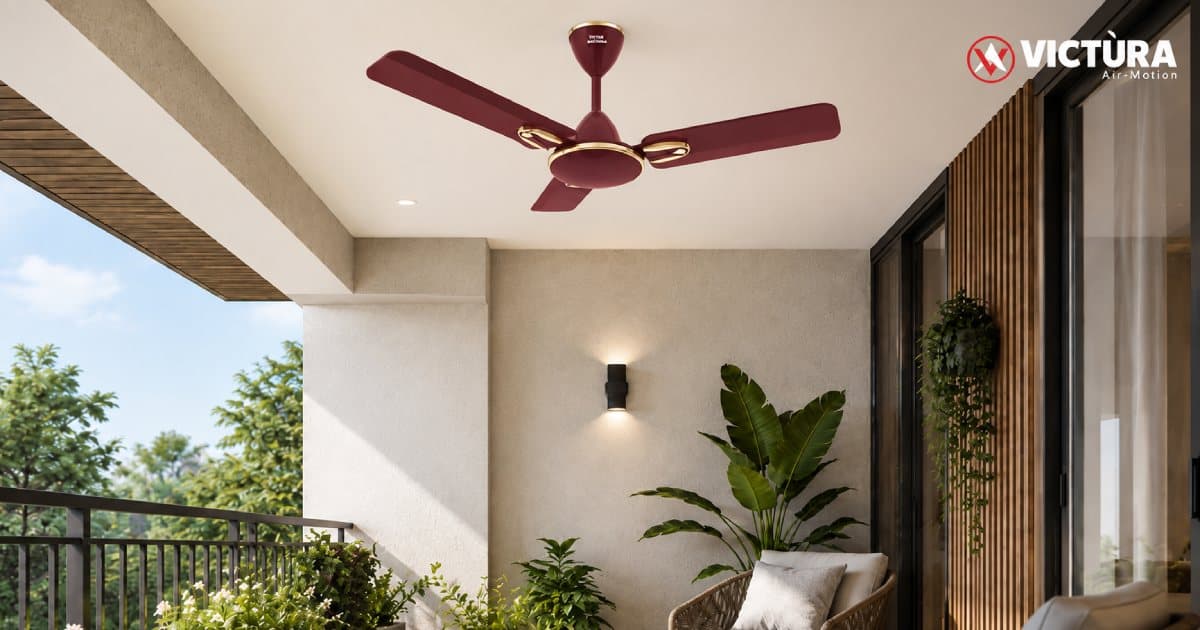
The balcony functions as the most genuine area of a house. The space exists outside of both the living room displays and the bedroom privacy. The space experiences first contact with heat and last contact with breeze while it shows seasonal transformations.
The space becomes pleasant on hot days when people choose to let fresh air enter or when they decide to keep doors closed. Balconies experience different conditions than indoor spaces because they face exposure to outside elements, airborne particles, moist air and changing weather patterns.
The selection of a fan for this area requires more consideration because of its practical use than simply taking one from the display area. The proper balcony fan system creates a comfortable outdoor environment which enables people to use the space.
Before selecting a fan for the balcony, understand its daily operations first.
The balcony fan needs to operate because it must maintain silent operation, protect against rust and provide continuous performance throughout its operational life.
The selection of a balcony type determines which attributes become essential for evaluation.
Balcony fans should handle:
A fan that operates effectively at its lowest speed creates a silent, comfortable space.
The quiet atmosphere of balconies makes all sounds more audible. The humming motor operates at low volume, which becomes audible during quiet nighttime hours.
The system provides long-lasting benefits through its removable grills, simple cleaning process, and strong construction materials.
People prefer ceiling fans as their primary choice because these fans provide excellent performance on most balconies.
A ceiling fan is suitable if:
The ceiling fan provides continuous airflow which enables people to use the balcony space throughout the day, even when temperatures reach their highest point.
The fan:
A good ceiling fan should feel like a gentle breeze, not a wind tunnel. Subtle air movement provides greater value than fast air movement in balconies.
The most effective fan solution for narrow balconies exists as wall-mounted fans which provide optimal performance in these compact spaces.
The effectiveness of wall fans stems from their multiple advantages which include their ability to provide direct airflow to seated or standing users, their suitability for protection against rain and their functionality in rectangular balcony spaces which extends their practical usage.
The balcony space needs wall fans because it serves as both a utility area, a reading space and an outdoor sitting area.
The balcony space needs a wall fan because it offers essential value through its designed purpose which includes both functional and unobtrusive elements.
Pedestal fans provide users with flexible operation capabilities, but their performance capabilities reach extreme limits when used on balconies.
Where Pedestal Fans Fit
They can work if:
The Downsides
Most balconies require permanent solutions, yet pedestal fans serve as temporary solutions for users.
Exhaust fans are designed to perform one task which determines their success in removing heated air from spaces. The fans serve their purpose in:
Exhaust fans create comfort when used together with ceiling or wall fans which help maintain proper airflow distribution.
Small table fans or clip fans can help during short balcony sessions, but they’re best kept as backup options.
The fans:
The fans should be treated as temporary solutions that provide short-term assistance on the balcony.
Here’s a simple way to decide:
The best balcony fan creates a peaceful environment because it works silently to restore the balcony area.
A well-chosen balcony fan does not make itself known to people who enter the space. The system operates silently to transform oppressive daytime heat into comfortable breaks and to create pleasant outdoor spaces that invite people to stay.
The usage of ceiling fans, wall-mounted fans, and exhaust fans enables users to maintain comfort while they relax. People should make careful decisions about balcony design because it creates a visual impact.
The balcony area transforms from unused space into a designed space when its airflow system operates at optimal levels. The space transforms from a balcony into a space that enhances your daily home life when you have a suitable fan. So, get the best fan for your balcony.
Get Victura Airmotion fans.
For a fan for the balcony, go for a 900 to 1200 mm sweep for the blades. Remember, smaller spaces don’t need large blades. In contrast, broader shaded areas allow for greater blade width without issue.
Pick a material like ABS or Aluminium that is durable and has a layer of protection against rust or moisture. The system needs to provide smooth low-speed performance together with silent operation which users consider more important than maximum airflow capacity.
Yes but make sure to clean it often. Fans work best when placed where they stay dry and clean. Enclosed spaces protect them from outdoor conditions. Moisture plus particles wear down parts faster if left exposed.
The design works better for balconies that have narrow spaces and low ceiling heights. Wall fans save space and allow directed airflow exactly where needed.
The units function as temporary solutions because they occupy floor space while their stability decreases in open environments.
The enclosed balcony space benefits from exhaust fans which help to remove hot air, but these fans require collaboration with ceiling or wall fans to establish a comfortable environment.
Keep moving with bright ideas. From the way air moves to clever home hints, our blog is your place to dive into ease, style, and smart energy use.