Victura Airmotion doesn’t believe dining spaces need louder fans or faster blades. They need air that understands the room.
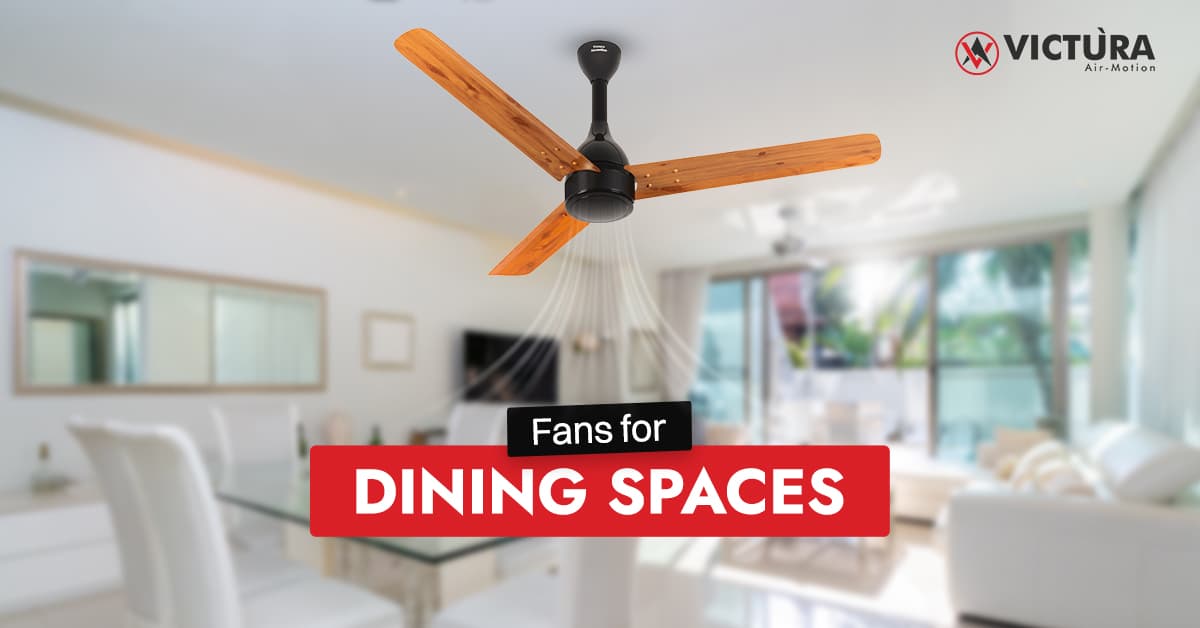
There’s a moment every dining space lives for. Plates are served. Conversations soften. The clink of cutlery fades into laughter. Food is warm, aromas rise gently and the room settles into a rhythm.
Now imagine that moment interrupted by a fan blasting air at full speed. Napkins lift. The soup cools too fast. Conversations pause. Comfort slips.
Dining spaces don’t need faster air. They need balanced airflow. And this is where many homes and restaurants get it wrong.
For decades, we’ve been conditioned to think that a good fan is a fast fan. The higher the speed, the better the cooling. That logic may work in a gym or a factory floor, but a dining space plays by different rules.
In dining areas:
High-speed airflow creates movement, not comfort. What diners actually need is even circulation: air that moves quietly, consistently, and without drawing attention to itself.
Air affects behaviour more than we realise, especially when we’re seated and eating.
Fast, aggressive airflow keeps the body alert. It triggers subtle signals that something is off: shoulders tense, posture shifts, attention wanders. This is useful in active spaces, but in dining areas, it shortens the moment.
Balanced airflow does the opposite. It tells the body that it’s safe to slow down. Breathing settles. Conversations stretch. People linger just a little longer over dessert. The meal stops being a task and becomes a pause in the day.
That psychological comfort is why diners often describe well-ventilated spaces as pleasant without being able to explain why.
Balanced airflow isn’t about how fast the blades spin. It’s about how the air travels through the room.
Think of it like this:
Balanced airflow means:
It’s the difference between feeling air and feeling comfortable.
Dining areas are emotional spaces. They’re where families connect after long days. Where guests linger. Where meals are meant to be savoured, not rushed.
Here’s why airflow matters more here than anywhere else:
Strong airflow cools food unevenly. Hot meals lose steam too fast. Cold dishes warm up too quickly. Balanced airflow preserves the temperature just long enough for the experience to feel right.
A noisy fan, especially at high speed, breaks the calm. Dining spaces thrive on low hums and soft conversations, not mechanical distractions.
A fast fan cools whoever sits directly beneath it. Everyone else adjusts, shifts chairs, or silently bears the discomfort. Balanced airflow reaches every seat equally.
Traditional induction fans were designed in a different era. Their focus was simple: spin faster to push more air.
But in dining spaces, this leads to:
So people do what they’ve always done, turn the speed up and down constantly, chasing comfort that never quite settles.
This is where BLDC technology quietly reshapes the experience.
Instead of brute force, BLDC fans focus on:
The result? Air moves through the dining space, not at the diners.
You don’t notice the fan.
You notice the comfort.
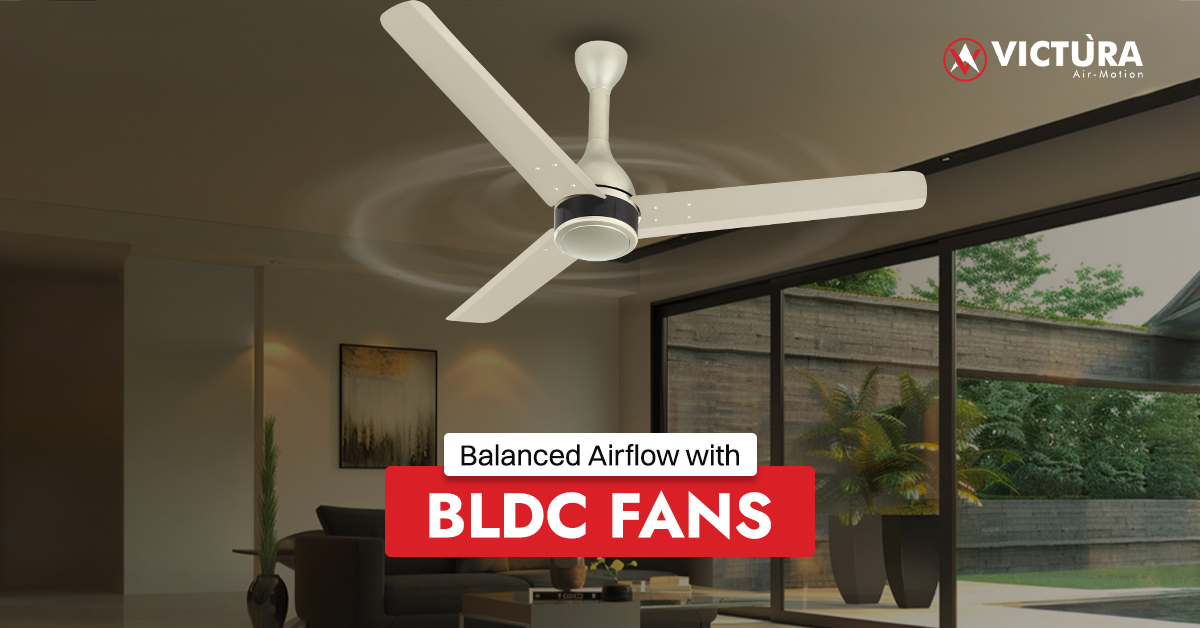
Victura Airmotion fans are designed with the understanding that airflow is not just physics—it’s behavioural.
In dining spaces, Victura focuses on:
Instead of pushing air downward aggressively, Victura fans encourage natural circulation, creating a calm envelope of cooling around the dining area.
The room feels settled.
People stay longer.
Meals feel complete.
There’s a hidden cost to constant high-speed airflow: fatigue.
Fast air:
Balanced airflow does the opposite. It allows diners to forget about temperature altogether. And when comfort disappears into the background, conversations come forward.
Next time you sit down to eat, ask yourself:
Comfort in dining spaces should feel effortless. It should support the moment, not compete with it.
Balanced airflow also consumes less power. When a fan doesn’t need to run at full speed to feel effective, it naturally draws less electricity.
Victura Airmotion BLDC fans are designed to deliver comfort at lower wattage, making them ideal for dining areas that often stay in use longer than other rooms.
Less power.
Less noise.
More comfort.
A good meal is about balance. Flavours, textures, temperatures, timing. So it is a good dining space.
When airflow is balanced, food tastes better, conversations flow longer, the room feels welcoming, and comfort feels natural.
Victura Airmotion doesn’t believe dining spaces need louder fans or faster blades.
They need air that understands the room.
Because in the end, the best airflow is the one you never have to think about.
A good fit for many dinner spaces those around 120 to 200 square feet, is a 48-inch fan mounted on the ceiling. When the room stretches bigger, airflow spreads better with a 52-inch model instead.
A strong airflow rating matters most when picking a fan. Positioning it right over the eating area helps spread coolness evenly. Instead of chasing fast spin alone, go for blades that are evenly shaped. Good movement beats quick noise every time.
Yes, lack of good airflow in a room is bad. Fresh air moving through matters more than most think. A space tight on circulation turns close, uneasy, almost heavy when people gather to eat. Heat builds without flow, making days harder to bear.
Most times, a dining space works well with airflow between 220 and 240 CMM. Too little moves stale air; too much feels gusty. The right volume keeps things fresh but calm. Often, that sweet spot lands near the higher end of that range. It shifts slightly depending on the ceiling height. Open layouts might need a stronger flow. Still, staying within those numbers usually does the job.
Fans work best when they become a part of the room, so pick ones with smooth surfaces. A narrow shape keeps them from drawing too much attention. Choose shades like grey, white, or beige they link well with lights and couches. Instead of popping out, they should fade into the background. Finishes without marks or texture help maintain a clear, calm look.
A trained hand might manage it alone, yet a correct setup leans on expertise. Safety plays a big role here, particularly overhead where mistakes risk more than wires. Most choose to get help from experts when mounting fans.
Keep moving with bright ideas. From the way air moves to clever home hints, our blog is your place to dive into ease, style, and smart energy use.